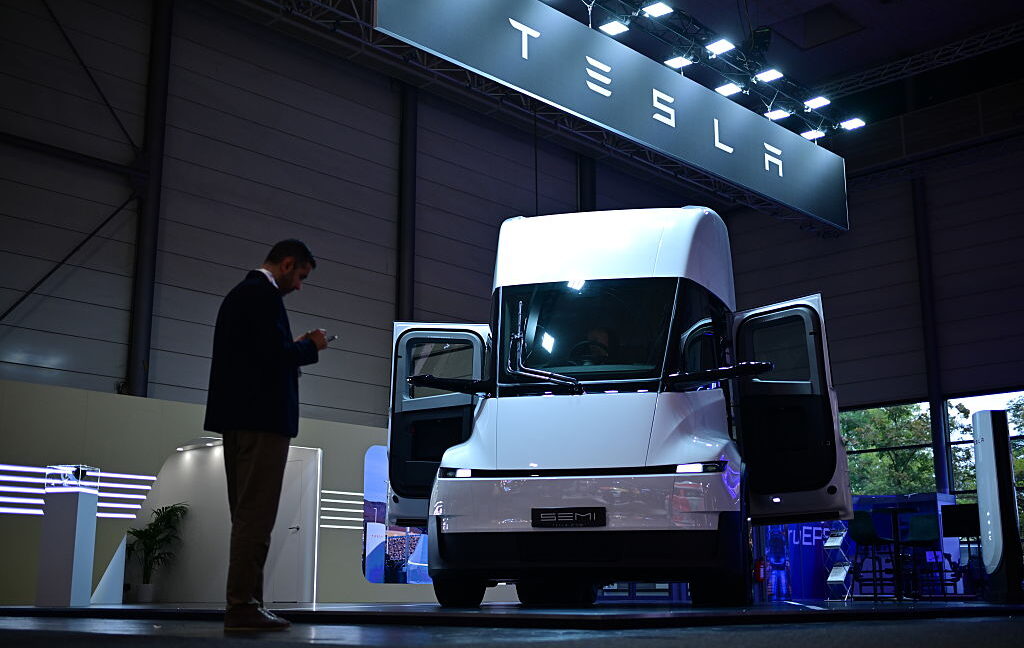
Tesla's Electric Semi Faces Charging Infrastructure Challenges

Edited by Ionna Brakeley
Charging & Ownership
Updated September 27, 2026
3 min read
1 linked source
Tesla's new electric truck, the Semi, which boasts a 500-mile range, is set to launch amid significant infrastructure limitations for electric trucking. The existing charging gaps could hinder the operational efficiency of the Semi, impacting logistics and transportation sectors that rely on long-haul trucking. This situation raises concerns for potential buyers regarding the practicality of using the Semi in real-world applications.
Share this story
Why it matters
- ✓Potential buyers may face challenges in finding adequate charging infrastructure, which could affect the day-to-day use of the Semi.
- ✓The limitations in charging access may lead to increased operational costs for businesses relying on electric trucks for logistics.
- ✓The availability of charging stations could influence the overall market adoption of electric trucks, impacting long-term ownership costs.
Tesla's Electric Semi Faces Charging Infrastructure Challenges
Tesla's highly anticipated electric truck, the Semi, is set to launch with a promising 500-mile range. However, it arrives at a time when significant gaps in charging infrastructure could pose challenges for its practical use in the trucking industry. This situation raises important questions for potential buyers and operators of electric trucks, particularly regarding the feasibility of long-haul operations.
What Changed
The introduction of the Tesla Semi marks a significant step in the evolution of electric trucking, but it is accompanied by concerns about the current state of charging infrastructure. According to Ars Technica, the existing gaps in charging availability could limit the operational efficiency of the Semi, making it difficult for logistics companies to fully embrace electric trucks for long-haul routes. This is particularly relevant as the trucking industry increasingly looks to reduce its carbon footprint and transition to electric vehicles.
Why It Matters for Buyers/Owners
-
Charging Accessibility: The lack of sufficient charging stations could hinder the day-to-day operations of businesses that rely on the Semi for logistics and transportation. Without adequate charging infrastructure, the practicality of using electric trucks for long-haul routes comes into question.
-
Operational Costs: If businesses are unable to find convenient charging options, they may incur higher operational costs, potentially negating the financial benefits of switching to electric trucks. This could affect the overall cost-effectiveness of owning a Tesla Semi.
-
Market Adoption: The availability of charging stations will play a crucial role in the broader market adoption of electric trucks. If charging infrastructure does not keep pace with the rollout of electric vehicles, it could slow down the transition to electric trucking and limit the options available to consumers and businesses.
Key Details from Source Material
The Tesla Semi is designed to offer a 500-mile range, which is a significant advantage for long-haul trucking. However, as noted by Ars Technica, the success of the Semi will largely depend on the development of a robust charging network. Currently, many areas lack sufficient charging stations that can accommodate the needs of electric trucks, which could lead to operational inefficiencies for companies looking to integrate the Semi into their fleets.
What to Watch Next
As Tesla prepares to launch the Semi, it will be important to monitor developments in charging infrastructure. Key points to watch include:
- Expansion of Charging Networks: Are companies and governments investing in expanding charging infrastructure to support electric trucks?
- Partnerships and Collaborations: Will Tesla form partnerships with logistics companies or charging network providers to enhance charging access for Semi owners?
- Market Response: How will potential buyers respond to the challenges posed by charging infrastructure, and will this impact their decision to invest in electric trucks?
In conclusion, while the Tesla Semi presents an exciting advancement in electric trucking, the current limitations in charging infrastructure could pose significant challenges for its adoption. Buyers and owners should stay informed about developments in charging access to better understand how these factors may influence their investment in electric vehicles.
Sources
These are the documents and reports used to build this brief so readers can verify the story directly.
- Tesla’s big electric truck faces an even bigger infrastructure challenge — Ars Technica CarsMEDIA
Reporting notes
EV Signal briefs are written to explain the verified change first, then add the context EV buyers and owners need to understand cost, availability, charging access, eligibility, or ownership impact.
If details are still developing, we try to say what is confirmed, what comes from secondary reporting, and what readers should verify before acting.
Source mix
1 linked source
1 media
Reviewed from: Ars Technica Cars.
Comments
Log in with
Loading comments…
More in Charging

Middle Eastern Gas Stations Transitioning to EV Charging Hubs
Gas stations across the Middle East are undergoing a significant transformation, shifting from…
1h ago
Kempower Launches EV Charging Infrastructure at Canadian Ports
Kempower has initiated a new partnership to install high-speed electric vehicle charging…
1h ago

US Energy Department Emphasizes Geothermal Energy in Policy Shift
The U.S. Energy Department is focusing on geothermal energy as part of its strategy for rapid…
7h ago

China Achieves Sub-5 Minute EV Charging to 70%, US Lags Behind
China has developed a new lithium iron phosphate (LFP) battery that can charge from 10% to 70% in…
13h ago