
Sakuu Produces 100 Dry-Printed Carbon Fiber Battery Cells on Kavian Platform

Edited by Ionna Brakeley
Charging & Ownership
Updated October 16, 2026
3 min read
1 linked source
Sakuu has successfully produced 100 dry-printed battery cells utilizing carbon composite and polymeric current collector (PCC) technology on its Kavian manufacturing platform. These metal-free battery cells aim to enhance safety and performance in battery technology. However, details regarding commercial availability and integration into electric vehicles remain unclear.
Share this story
Why it matters
- ✓The introduction of metal-free battery cells could lead to safer battery options for EVs, potentially reducing fire risks.
- ✓If successful, this technology may lower production costs, which could translate to more affordable EVs for consumers.
- ✓The use of dry-printed technology may streamline manufacturing processes, potentially increasing battery availability and reducing wait times for new EV models.
Sakuu's Breakthrough in Battery Technology
Sakuu has announced the successful production of 100 dry-printed battery cells using its innovative Kavian manufacturing platform. These cells feature a 100% dry anode and dry cathode, utilizing carbon composite materials and polymeric current collector (PCC) technology. This significant advancement marks a step forward in battery manufacturing, particularly in the realm of safety and performance.
What Changed
The key development is the creation of fully functional metal-free battery cells, which are designed to enhance safety through the use of PCC architecture. Unlike traditional battery cells that often contain metals, these new cells aim to eliminate the associated risks, such as fire hazards. The production of these cells on the Kavian platform indicates a shift towards more sustainable and efficient battery manufacturing processes.
Why It Matters for Buyers and Owners
-
Safety Improvements: The use of PCC technology in battery cells could lead to safer electric vehicles (EVs), potentially reducing the risk of battery-related incidents.
-
Cost Implications: If Sakuu's technology proves scalable, it could lower production costs for batteries, which may result in more affordable EV options for consumers in the future.
-
Manufacturing Efficiency: The dry-printed technology could streamline the manufacturing process, potentially increasing the availability of batteries and reducing lead times for new EV models.
Key Details from Source Material
According to Charged EVs, Sakuu's Kavian platform has successfully printed these battery cells, which are characterized by their metal-free composition. The technology aims to deliver the safety benefits of PCC architecture while also enhancing performance metrics. However, the report does not provide specific details regarding when these cells will be commercially available or how they will be integrated into existing or future EV models.
What to Watch Next
As Sakuu continues to develop its battery technology, stakeholders in the EV market should keep an eye on further announcements regarding commercial availability and potential partnerships with automotive manufacturers. The implications of this technology could be significant, but clarity on its practical applications and market readiness is still needed. Additionally, monitoring consumer response to these advancements will be crucial in understanding their impact on the EV landscape.
Sources
These are the documents and reports used to build this brief so readers can verify the story directly.
Reporting notes
EV Signal briefs are written to explain the verified change first, then add the context EV buyers and owners need to understand cost, availability, charging access, eligibility, or ownership impact.
If details are still developing, we try to say what is confirmed, what comes from secondary reporting, and what readers should verify before acting.
Source mix
1 linked source
1 media
Reviewed from: Charged EVs.
Newsletter
Weekly EV signal. No spam.
Comments
Log in with
Loading comments…
More in Ownership
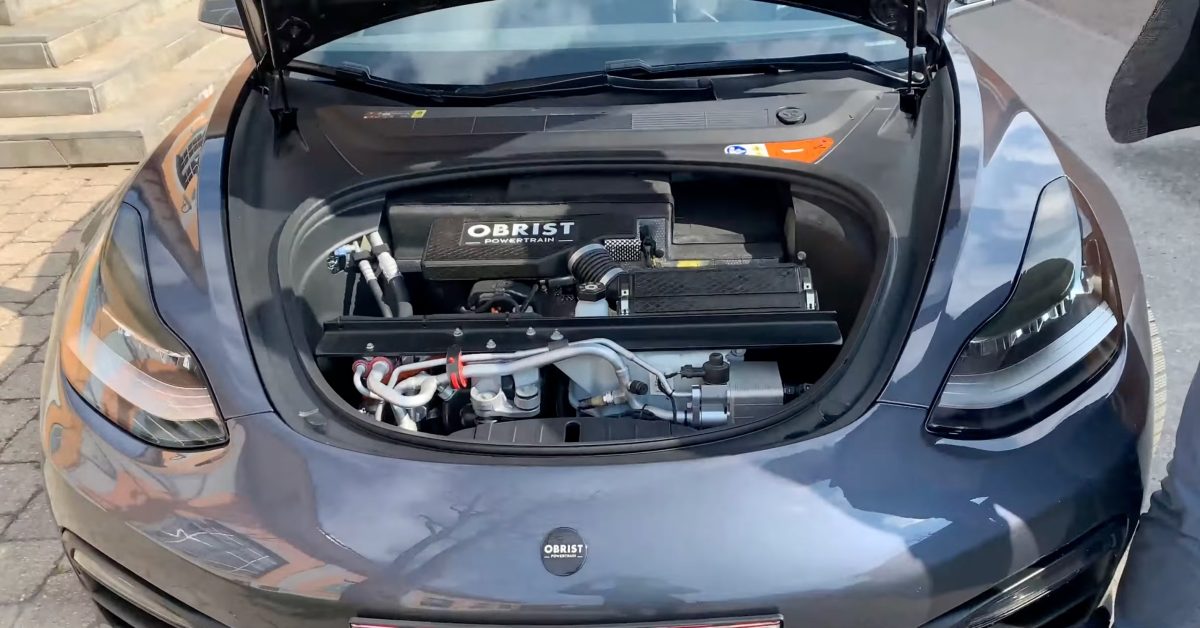
Obrist Engineering Firm Files for Bankruptcy with $37 Million Debt
Obrist, the Austrian engineering company known for retrofitting Tesla vehicles with gas engines,…
1h ago

Webinar Highlights Advances in High-Voltage Power Electronics for EVs
A recent webinar discussed the shift towards 800V+ architectures and the integration of SiC/GaN…
1h ago

Xponential Battery Materials and SiCAM Collaborate on Silicon-Sulfur Battery Platform
Xponential Battery Materials (XBM) and SiCAM Technologies have announced a collaboration to develop…
1h ago

HUBER+SUHNER Introduces RADOX® High Voltage Cables for EVs
HUBER+SUHNER has unveiled its RADOX® high voltage cables, designed to replace traditional…
1h ago