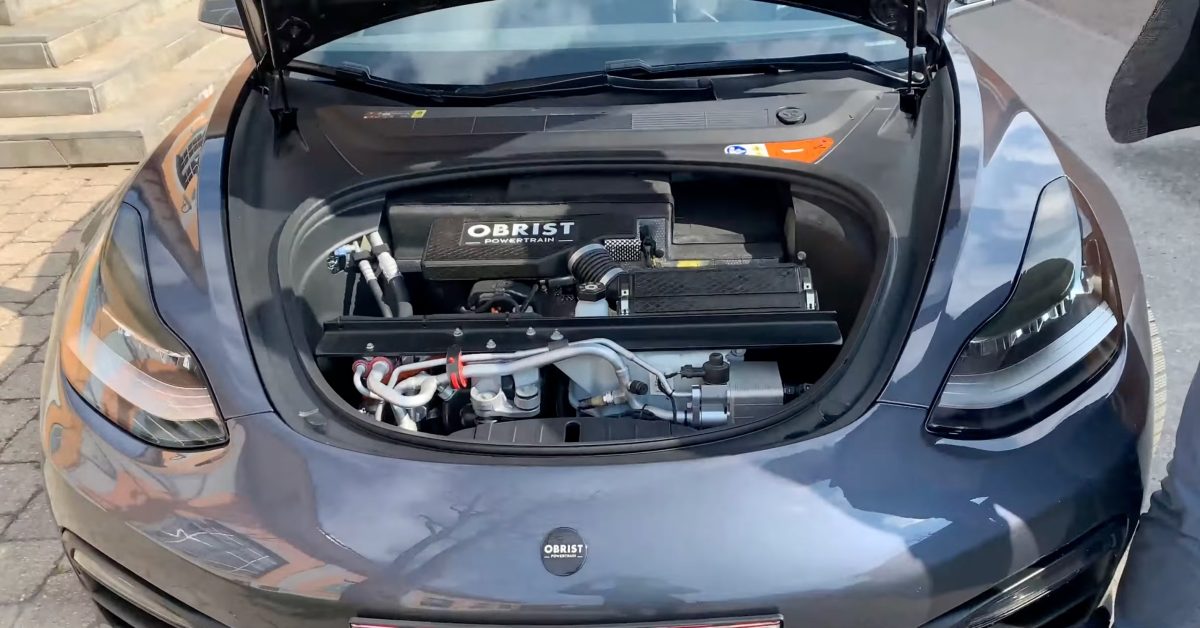
Obrist Engineering Firm Files for Bankruptcy with $37 Million Debt

Edited by Ionna Brakeley
Charging & Ownership
Updated October 16, 2026
3 min read
1 linked source
Obrist, the Austrian engineering company known for retrofitting Tesla vehicles with gas engines, has declared bankruptcy, reporting debts of approximately $37 million. The company, which spent over a decade promoting its 'HyperHybrid' range extender, failed to bring any production vehicles to market. This development affects stakeholders in the EV sector, particularly those interested in hybrid technologies.
Share this story
Why it matters
- ✓The bankruptcy of Obrist may hinder the development of alternative hybrid technologies for EV buyers who are looking for options beyond fully electric vehicles.
- ✓With no production vehicles realized, consumers will not have access to the promised benefits of Obrist's range extender technology.
- ✓This event could impact the perception of hybrid systems in the EV market, potentially influencing future investments and innovations.
Obrist Engineering Firm Files for Bankruptcy
Obrist, the Austrian engineering firm recognized for its controversial approach of installing gas engines into Tesla vehicles, has filed for bankruptcy. The company reported combined debts of approximately €31.8 million, or around $37 million, across three of its subsidiaries. This marks a significant turn of events for a firm that spent over a decade advocating for its 'HyperHybrid' range extender as a viable alternative to battery-electric vehicles.
What Changed
Obrist's bankruptcy highlights the challenges faced by companies attempting to innovate within the electric vehicle (EV) sector. Despite its ambitious plans, Obrist was unable to bring a single production vehicle to market that utilized its gas engine technology. The company's efforts to retrofit Tesla Model 3s with gas engines were met with skepticism and ultimately did not yield any commercially viable products.
Why It Matters for Buyers and Owners
The implications of Obrist's bankruptcy extend beyond the company itself:
- Impact on Hybrid Technology: The failure of Obrist may slow down the development of hybrid technologies that could appeal to consumers seeking alternatives to fully electric vehicles. This could limit options for buyers who are hesitant to transition entirely to electric.
- Consumer Access: With no production vehicles realized, consumers will not have the opportunity to experience the benefits that Obrist's range extender technology promised. This may lead to disappointment among those who were interested in hybrid solutions.
- Market Perception: The bankruptcy could affect the overall perception of hybrid systems in the EV market, potentially influencing future investments and innovations in this area. Stakeholders may become more cautious in pursuing hybrid technologies, which could stifle competition and innovation.
Key Details from Source Material
According to Electrek, Obrist's approach involved removing battery cells from Tesla vehicles and replacing them with gas engines, a move that was met with mixed reactions from the EV community. The company's vision of a 'HyperHybrid' vehicle was aimed at addressing range anxiety and providing a more flexible solution for consumers. However, the lack of a successful production model indicates that the market may not have been ready for such a concept.
What to Watch Next
As the situation develops, it will be important to monitor any potential fallout from Obrist's bankruptcy, including how it may affect other companies in the hybrid and electric vehicle sectors. Additionally, stakeholders should keep an eye on the market's response to this news and whether it influences future investments in hybrid technology. The bankruptcy could prompt discussions about the viability of alternative fuel sources in the EV landscape, as well as the ongoing evolution of consumer preferences in the automotive market.
Sources
These are the documents and reports used to build this brief so readers can verify the story directly.
Reporting notes
EV Signal briefs are written to explain the verified change first, then add the context EV buyers and owners need to understand cost, availability, charging access, eligibility, or ownership impact.
If details are still developing, we try to say what is confirmed, what comes from secondary reporting, and what readers should verify before acting.
Source mix
1 linked source
1 media
Reviewed from: Electrek.
Newsletter
Weekly EV signal. No spam.
Comments
Log in with
Loading comments…
More in Ownership

Webinar Highlights Advances in High-Voltage Power Electronics for EVs
A recent webinar discussed the shift towards 800V+ architectures and the integration of SiC/GaN…
1h ago

Xponential Battery Materials and SiCAM Collaborate on Silicon-Sulfur Battery Platform
Xponential Battery Materials (XBM) and SiCAM Technologies have announced a collaboration to develop…
1h ago

Sakuu Produces 100 Dry-Printed Carbon Fiber Battery Cells on Kavian Platform
Sakuu has successfully produced 100 dry-printed battery cells utilizing carbon composite and…
1h ago

HUBER+SUHNER Introduces RADOX® High Voltage Cables for EVs
HUBER+SUHNER has unveiled its RADOX® high voltage cables, designed to replace traditional…
1h ago