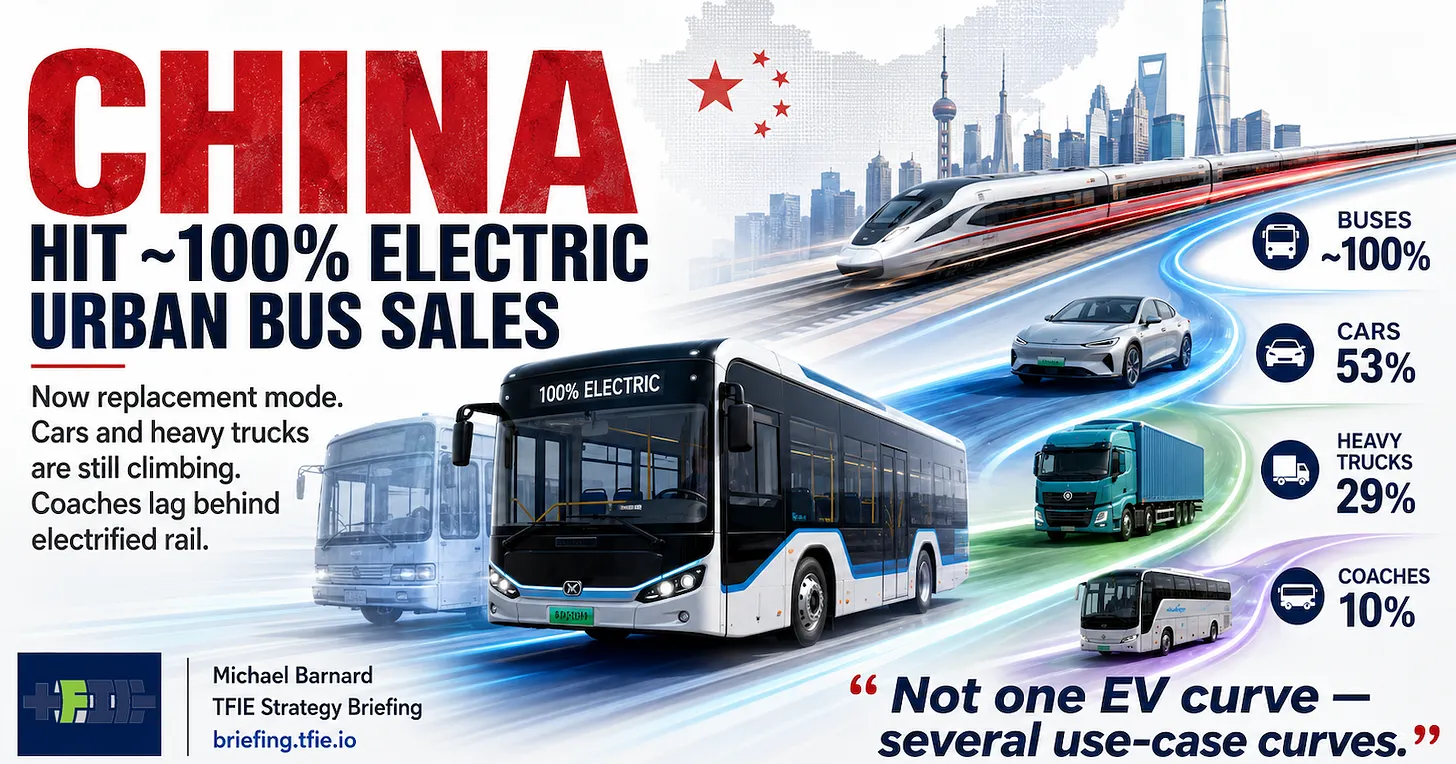
China's EV Transition Involves Four Distinct Changes

Edited by Ionna Brakeley
Charging & Ownership
Updated October 17, 2026
3 min read
1 linked source
China's electric vehicle (EV) transition encompasses four different aspects, primarily focusing on urban buses, passenger vehicles, commercial vehicles, and charging infrastructure. The shift is significant for urban transportation, as nearly all new buses in cities are now electric, indicating a broader trend towards electrification. However, the overall national EV market share may not fully capture the extent of these changes.
Share this story
Why it matters
- ✓Urban bus electrification can lead to reduced operating costs for cities, potentially impacting public transportation pricing.
- ✓Increased availability of electric buses may encourage local governments to invest more in EV infrastructure.
- ✓The transition could influence the overall perception and acceptance of EVs among consumers, affecting future purchasing decisions.
China's EV Transition Involves Four Distinct Changes
China's electric vehicle (EV) transition is not a monolithic shift but rather consists of four distinct transitions that are reshaping the automotive landscape. Most notably, the country has reached a point where nearly all new urban buses are now electric, marking a significant milestone in public transportation electrification.
What Changed
The most visible change in China's EV transition is the electrification of urban buses. According to CleanTechnica, the procurement of new buses in many cities is no longer a question of whether to replace diesel buses, but rather how quickly to transition to electric models. This shift is indicative of a broader movement towards electrification across various vehicle categories, including passenger vehicles and commercial vehicles, as well as the development of charging infrastructure.
Why It Matters for Buyers and Owners
- Cost Implications: The electrification of urban buses can lead to lower operational costs for public transportation systems, which may eventually translate to reduced fares for riders.
- Infrastructure Development: As cities invest in electric buses, this may spur further development of charging infrastructure, making it easier for private EV owners to charge their vehicles.
- Consumer Perception: The widespread adoption of electric buses can enhance the public's perception of EVs, potentially influencing consumer confidence and encouraging more individuals to consider purchasing electric vehicles.
Key Details from Source Material
The transition in China is characterized by four key areas: urban buses, passenger vehicles, commercial vehicles, and charging infrastructure. While the national EV market share is an important metric, it may not fully encapsulate the rapid advancements occurring in urban transportation. The CleanTechnica article emphasizes that the electrification of buses is a clear indicator of the country's commitment to reducing emissions and improving air quality in urban areas.
What to Watch Next
As China continues to push forward with its EV transition, it will be important to monitor how these changes affect the broader market dynamics. Key areas to watch include:
- Expansion of Charging Infrastructure: How cities will develop their charging networks to support the growing number of electric buses and private EVs.
- Policy Changes: Any new government policies aimed at further promoting EV adoption and supporting infrastructure development.
- Market Response: How consumers react to the increasing presence of electric buses and whether it influences their purchasing decisions regarding personal EVs.
In conclusion, China's multifaceted approach to electrification, particularly in urban transportation, represents a significant shift that could have lasting implications for EV buyers and owners. The focus on electric buses not only enhances public transport but also sets the stage for a more comprehensive transition to electric mobility across the country.
Sources
These are the documents and reports used to build this brief so readers can verify the story directly.
- China’s EV Transition Is Four Different Transitions — CleanTechnicaMEDIA
Reporting notes
EV Signal briefs are written to explain the verified change first, then add the context EV buyers and owners need to understand cost, availability, charging access, eligibility, or ownership impact.
If details are still developing, we try to say what is confirmed, what comes from secondary reporting, and what readers should verify before acting.
Source mix
1 linked source
1 media
Reviewed from: CleanTechnica.
Newsletter
Weekly EV signal. No spam.
Comments
Log in with
Loading comments…
More in Ownership
Cybercab Launches in Australia Amid Union Opposition
The Cybercab, an autonomous vehicle, has officially launched in major Australian cities. This…
1h ago
Rivian R2 Owner Reviews Comfort and Efficiency After Two Months
A Rivian R2 owner has shared insights after two months of ownership, highlighting the vehicle's…
1h ago
Growth in African E-Mobility Sector Highlighted at Africa E-Mobility Week & Forum
The 5th Africa E-Mobility Week & Forum recently took place in Stellenbosch, South Africa, marking…
1h ago
Franco-German Car Deal Weakens EU Climate Standards
The recent agreement between France and Germany to relax the EU's car CO₂ standards and IAA…
13h ago