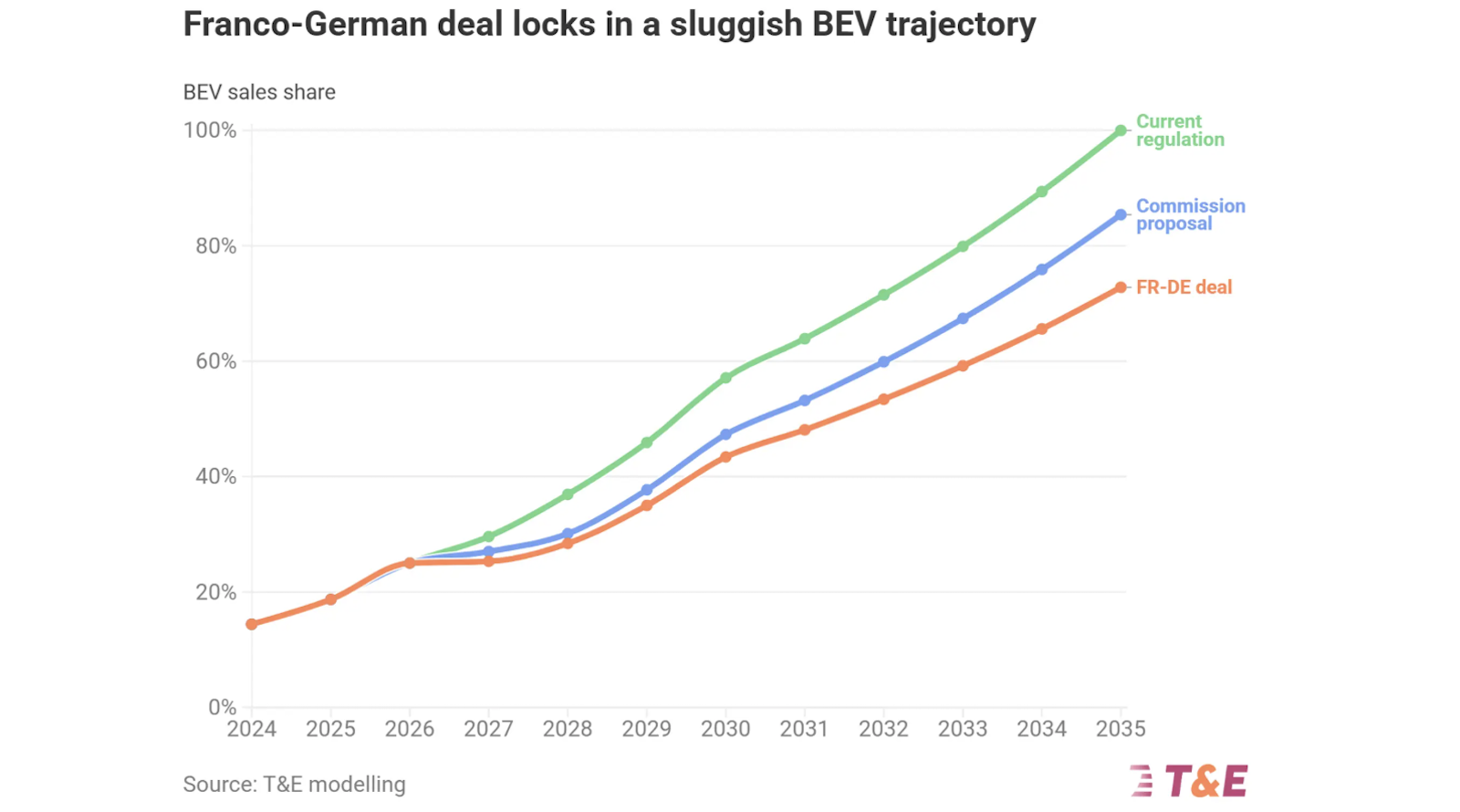
Franco-German Car Deal Weakens EU Climate Standards

Edited by Ionna Brakeley
Charging & Ownership
Updated October 17, 2026
3 min read
1 linked source
The recent agreement between France and Germany to relax the EU's car CO₂ standards and IAA requirements has been criticized as a 'historic mistake' by Transport & Environment (T&E). This deal could jeopardize Europe's competitiveness in the global electric vehicle (EV) and battery markets, affecting the region's climate ambitions. The implications for EV buyers and owners are significant, as this could lead to slower progress in emissions reductions and innovation in the automotive sector.
Share this story
Why it matters
- ✓Potential for higher emissions from vehicles, impacting air quality and climate goals.
- ✓Slower transition to electric vehicles may lead to fewer options and higher prices for consumers.
- ✓Reduced incentives for manufacturers to invest in EV technology could limit advancements in charging infrastructure.
Overview of the Franco-German Car Deal
The recent agreement between the French and German governments to loosen the European Union's car CO₂ standards and IAA requirements has sparked significant controversy. This decision has been labeled a 'historic mistake' by Transport & Environment (T&E), a prominent advocacy group focused on sustainable transport. The implications of this deal extend beyond regulatory changes; they pose a serious threat to Europe's standing in the global electric vehicle (EV) and battery race.
What Changed?
The core of the Franco-German deal involves a relaxation of stringent CO₂ emissions standards that have been pivotal in shaping the EU's automotive regulations. By easing these standards, the agreement effectively allows for higher emissions from new vehicles, which could slow the transition to cleaner technologies. The IAA (International Motor Show) requirements, which promote innovation and sustainability in the automotive sector, are also being relaxed, further undermining the EU's climate ambitions.
Why It Matters for Buyers and Owners
The ramifications of this deal for EV buyers and owners are multifaceted:
- Higher Emissions: The relaxation of emissions standards could lead to a rise in the number of high-emission vehicles on the road, negatively impacting air quality and climate change efforts.
- Slower Transition to EVs: With reduced pressure on manufacturers to innovate and produce electric vehicles, consumers may face a limited selection of EV options, potentially leading to higher prices as demand outstrips supply.
- Investment in Infrastructure: The weakening of regulatory requirements may deter manufacturers from investing in necessary charging infrastructure, making it more challenging for EV owners to find convenient charging options.
Key Details from Source Material
According to CleanTechnica, the agreement has raised alarms among environmental advocates, who argue that it undermines the EU's leadership role in the global transition to electric mobility. T&E's criticism highlights the potential long-term consequences of this decision, suggesting that it could hinder Europe's ability to compete with other regions that are aggressively pursuing EV technology and sustainability initiatives.
The deal's implications are particularly concerning given the current global emphasis on reducing carbon footprints and transitioning to greener technologies. As countries around the world ramp up their commitments to combat climate change, Europe's decision to weaken its standards may set a troubling precedent.
What to Watch Next
As the details of this agreement unfold, it will be crucial to monitor how it affects the automotive industry in Europe and the broader implications for climate policy. Key areas to watch include:
- Manufacturer Responses: How will automakers adapt to the relaxed standards? Will they continue to invest in EV technology, or will they revert to producing higher-emission vehicles?
- Consumer Reactions: How will buyers respond to the changing landscape of vehicle options? Will there be a pushback against higher-emission vehicles?
- Regulatory Developments: Keep an eye on any future legislative changes or proposals aimed at counteracting the effects of this deal.
In conclusion, the Franco-German car deal represents a significant shift in the EU's approach to automotive emissions and climate policy. As the situation develops, it will be essential for EV buyers and owners to stay informed about how these changes may impact their choices and the future of electric mobility in Europe.
Sources
These are the documents and reports used to build this brief so readers can verify the story directly.
Reporting notes
EV Signal briefs are written to explain the verified change first, then add the context EV buyers and owners need to understand cost, availability, charging access, eligibility, or ownership impact.
If details are still developing, we try to say what is confirmed, what comes from secondary reporting, and what readers should verify before acting.
Source mix
1 linked source
1 media
Reviewed from: CleanTechnica.
Newsletter
Weekly EV signal. No spam.
Comments
Log in with
Loading comments…
More in Ownership
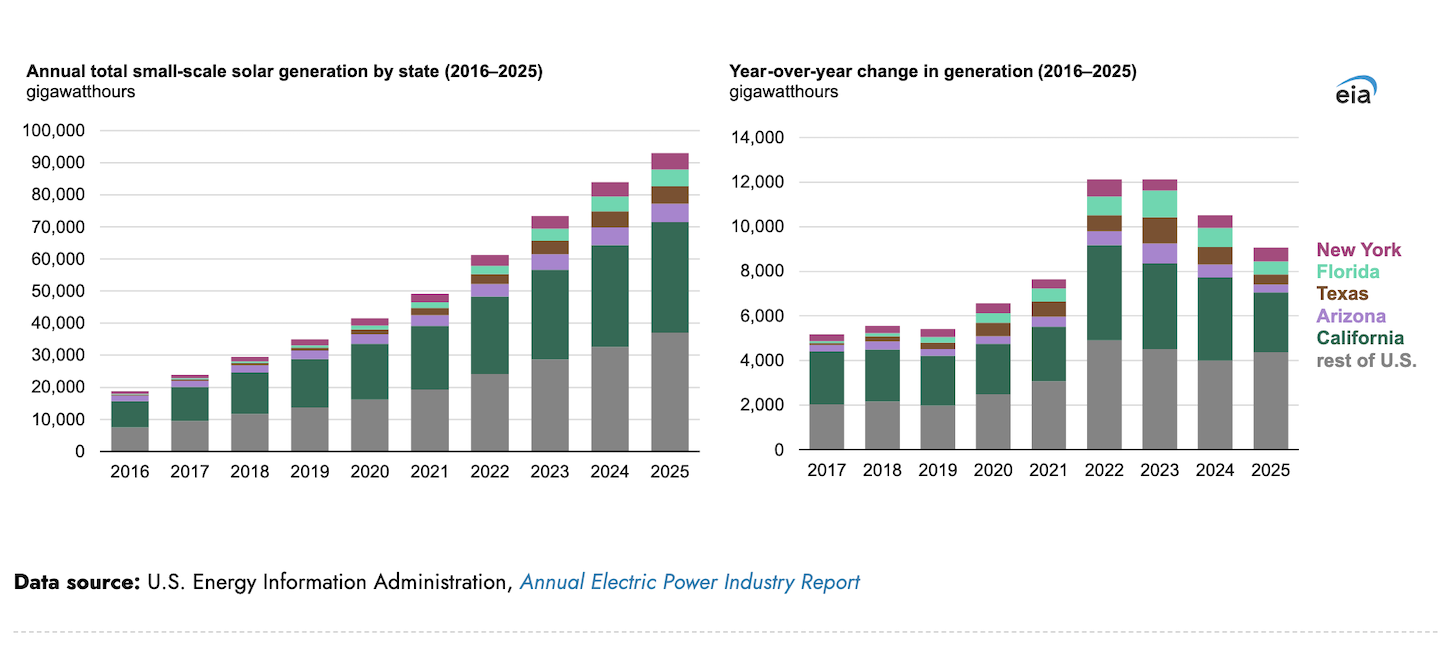
U.S. Small-Scale Solar Generation Quadruples Over the Past Decade
U.S. generation from small-scale solar photovoltaic systems has increased from 18,812…
1h ago
Waymo Launches Plans for Autonomous Ride-Hailing in Toronto
Waymo has announced its plans to establish a fully autonomous ride-hailing service in Toronto,…
1h ago
France and Germany Reach Partial Agreement on New Exhaust Emissions Rules
France and Germany have come to a tentative agreement on new exhaust emissions rules aimed at…
7h ago

CleanTechnica Press Now Accepting Manuscript Submissions for New Book
CleanTechnica Press is inviting authors to submit manuscripts for potential publication, with plans…
7h ago