U.S. Small-Scale Solar Generation Quadruples Over the Past Decade

Edited by Ionna Brakeley
Charging & Ownership
Updated October 17, 2026
3 min read
1 linked source
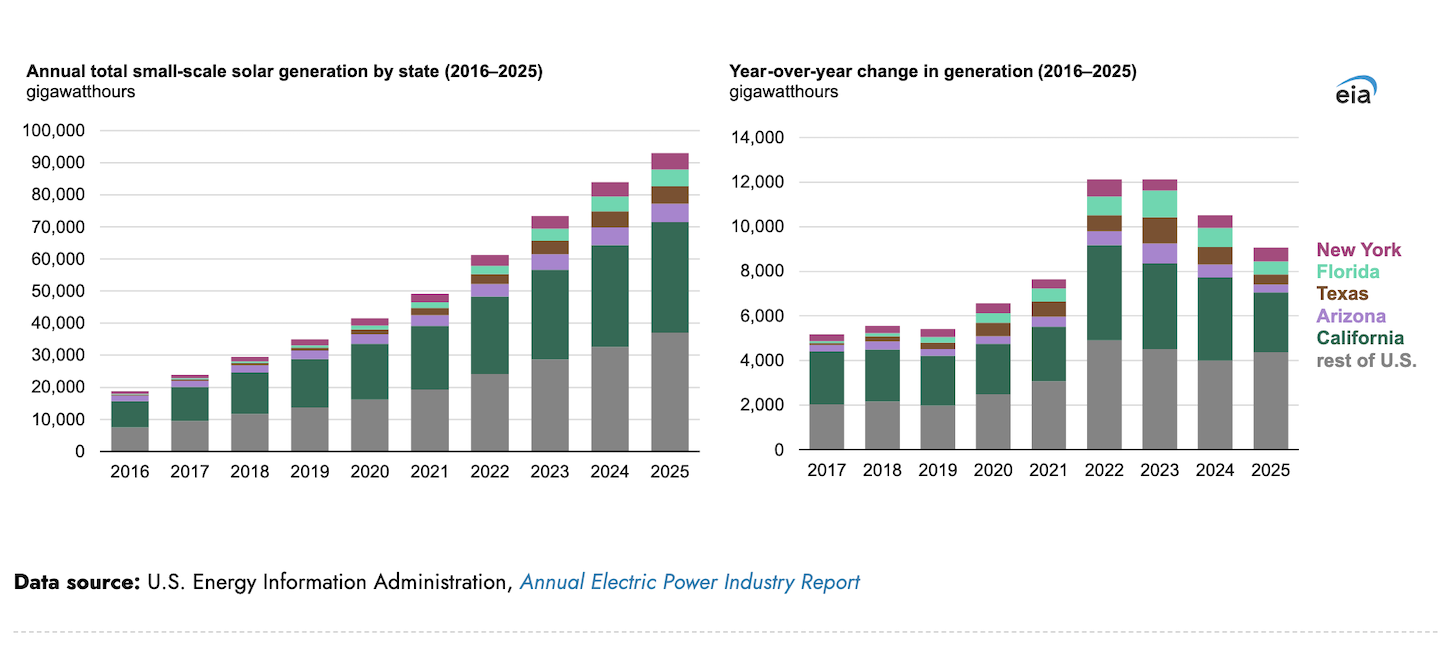
U.S. generation from small-scale solar photovoltaic systems has increased from 18,812 gigawatt-hours (GWh) to 92,979 GWh in the last decade, marking a fourfold growth. This surge primarily affects homeowners and businesses that utilize rooftop solar systems for energy generation. The data highlights significant regional disparities, with California, Arizona, Texas, and Florida leading in small-scale solar generation.
Share this story
Why it matters
- ✓Increased small-scale solar generation can lower electricity costs for EV owners who use solar energy to charge their vehicles.
- ✓Homeowners may be eligible for incentives and rebates for installing solar systems, which can reduce the overall cost of EV ownership.
- ✓Greater availability of solar energy can enhance charging access and convenience for EV owners, especially in sunny regions.
U.S. Small-Scale Solar Generation Quadruples Over the Past Decade
U.S. generation from small-scale solar photovoltaic systems has seen remarkable growth, increasing from 18,812 gigawatt-hours (GWh) to 92,979 GWh over the last decade. This fourfold increase underscores the rising adoption of rooftop solar systems across the country, particularly benefiting homeowners and businesses looking to harness renewable energy.
What Changed
The data indicates a significant shift in the landscape of solar energy generation in the U.S. Small-scale solar systems, defined as those with a capacity of less than 1 megawatt, have become increasingly popular. The four states leading this charge—California, Arizona, Texas, and Florida—are characterized by their sunny climates, which are conducive to solar energy production. This growth reflects a broader trend towards renewable energy sources and a growing awareness of the benefits of solar power.
Why It Matters for Buyers and Owners
-
Cost Savings: With the increase in small-scale solar generation, EV owners can potentially reduce their electricity bills by using solar energy to charge their vehicles. This can lead to significant savings over time, especially in states with high electricity rates.
-
Incentives and Rebates: Homeowners considering the installation of solar systems may find various incentives and rebates available, which can help offset the initial costs. These financial benefits can make solar energy more accessible and appealing for EV owners.
-
Enhanced Charging Access: As more households adopt solar energy, the overall availability of renewable energy sources for charging electric vehicles increases. This can improve the convenience and reliability of charging options for EV owners, particularly in regions with abundant sunlight.
Key Details from Source Material
According to CleanTechnica, the growth in small-scale solar generation reflects a significant trend towards renewable energy adoption in the U.S. The increase from 18,812 GWh to 92,979 GWh over the last decade highlights the expanding role of rooftop solar systems in the energy mix. The leading states in small-scale solar generation—California, Arizona, Texas, and Florida—benefit from favorable climates that support solar energy production.
What to Watch Next
As the solar energy landscape continues to evolve, it will be important to monitor developments in state and federal policies that affect solar incentives and rebates. Additionally, the impact of technological advancements in solar energy systems and battery storage solutions could further influence the adoption of solar energy among EV owners. Keeping an eye on these trends will provide valuable insights into the future of small-scale solar generation and its implications for electric vehicle ownership.
Sources
These are the documents and reports used to build this brief so readers can verify the story directly.
- U.S. Small-Scale Solar Generation Has Quadrupled in the Last Decade — CleanTechnicaMEDIA
Reporting notes
EV Signal briefs are written to explain the verified change first, then add the context EV buyers and owners need to understand cost, availability, charging access, eligibility, or ownership impact.
If details are still developing, we try to say what is confirmed, what comes from secondary reporting, and what readers should verify before acting.
Source mix
1 linked source
1 media
Reviewed from: CleanTechnica.
Newsletter
Weekly EV signal. No spam.
Comments
Log in with
Loading comments…
More in Ownership
Franco-German Car Deal Weakens EU Climate Standards
The recent agreement between France and Germany to relax the EU's car CO₂ standards and IAA…
2h ago

Waymo Launches Plans for Autonomous Ride-Hailing in Toronto
Waymo has announced its plans to establish a fully autonomous ride-hailing service in Toronto,…
2h ago

France and Germany Reach Partial Agreement on New Exhaust Emissions Rules
France and Germany have come to a tentative agreement on new exhaust emissions rules aimed at…
8h ago

CleanTechnica Press Now Accepting Manuscript Submissions for New Book
CleanTechnica Press is inviting authors to submit manuscripts for potential publication, with plans…
8h ago