Tesla Patent Unveils Flexible Sensors for Optimus Robot

Edited by Ionna Brakeley
Charging & Ownership
Updated October 16, 2026
3 min read
1 linked source
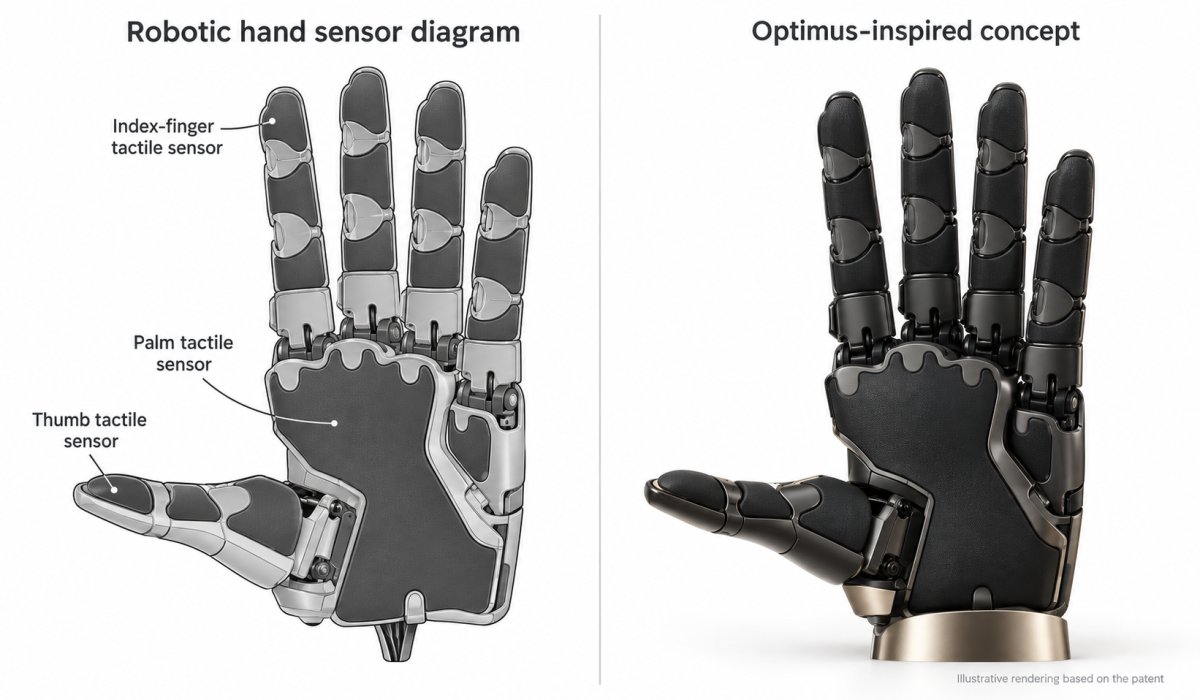
Tesla's recent patent application reveals the development of flexible robotic touch sensors designed to allow its Optimus robot to detect pressure and feel objects. This innovation may enhance the robot's interaction capabilities, although specific applications and timelines remain unclear. The patent details two methods for manufacturing curved sensor arrays, indicating a focus on adaptability in robotic design.
Share this story
Why it matters
- ✓Improved sensory feedback could enhance the functionality of Tesla's Optimus robot, potentially leading to more advanced applications in home and industrial settings.
- ✓As Tesla continues to innovate in robotics, this could influence future EV features, particularly in automation and user interaction.
- ✓The development of these sensors may affect the overall cost and capabilities of Tesla's robotic offerings, which could indirectly impact EV buyers interested in Tesla's broader technology ecosystem.
Tesla Patent Unveils Flexible Sensors for Optimus Robot
Tesla has recently filed a patent application that outlines the development of flexible robotic touch sensors. These sensors are designed to enable the company's Optimus robot to detect pressure and feel objects, which could significantly enhance its interaction capabilities with the environment.
What Changed
The key change is the introduction of flexible touch sensors that allow the Optimus robot to have a more nuanced sense of touch. According to the patent, these sensors can detect varying levels of pressure, which is crucial for tasks that require delicate handling or interaction with different materials. The patent also describes two distinct approaches to manufacturing curved sensor arrays, suggesting that Tesla is focusing on creating adaptable and versatile robotic components.
Why It Matters for Buyers/Owners
- Enhanced Functionality: The ability for Optimus to feel objects could lead to improved performance in tasks ranging from household chores to more complex industrial applications. This could make the robot more useful for consumers and businesses alike.
- Influence on EV Features: As Tesla continues to innovate in robotics, the technologies developed for Optimus may eventually influence features in Tesla's electric vehicles, particularly in areas related to automation and user interaction.
- Cost Implications: While the patent does not provide specific details on pricing, the development of advanced sensors could impact the overall cost of Tesla's robotic offerings. This may indirectly affect EV buyers who are interested in Tesla's broader technology ecosystem.
Key Details from Source Material
The patent application, as reported by Not a Tesla App, emphasizes the importance of flexible sensors in robotic design. These sensors are not only meant to detect pressure but also to adapt to various shapes and surfaces, which is essential for a robot that may need to navigate diverse environments. The two manufacturing methods outlined in the patent could lead to more efficient production processes, although specifics on implementation and timelines are not yet available.
What to Watch Next
As Tesla continues to develop its robotics technology, it will be important to monitor any announcements regarding the practical applications of these sensors in the Optimus robot. Additionally, updates on how these advancements might influence Tesla's electric vehicles and their features will be crucial for potential buyers and current owners. Keep an eye on Tesla's future patent filings and product announcements for further insights into how this technology may evolve.
Sources
These are the documents and reports used to build this brief so readers can verify the story directly.
- Tesla Patent Reveals Flexible Sensors That Let Optimus Feel Objects — Not a Tesla AppMEDIA
Reporting notes
EV Signal briefs are written to explain the verified change first, then add the context EV buyers and owners need to understand cost, availability, charging access, eligibility, or ownership impact.
If details are still developing, we try to say what is confirmed, what comes from secondary reporting, and what readers should verify before acting.
Source mix
1 linked source
1 media
Reviewed from: Not a Tesla App.
Newsletter
Weekly EV signal. No spam.
Comments
Log in with
Loading comments…
More in Ownership
Family Transition to Electric Vehicles: A Personal Journey
A family in Charlotte, North Carolina, has embraced electric vehicles (EVs) with the addition of a…
7h ago

FERC Proposes Streamlined Approval for LNG Projects, Reducing Air Quality Oversight
The Federal Energy Regulatory Commission (FERC) has proposed new measures that would expedite the…
7h ago
Waymo Opens Robotaxi Service to All in San Antonio, San Diego, and Tampa
Waymo has expanded its robotaxi service to be available to everyone in San Antonio, San Diego, and…
7h ago
Obrist Engineering Firm Files for Bankruptcy with $37 Million Debt
Obrist, the Austrian engineering company known for retrofitting Tesla vehicles with gas engines,…
14h ago