Study: Transition to Electric Company Cars Could Create 344,000 Jobs in the EU by 2030
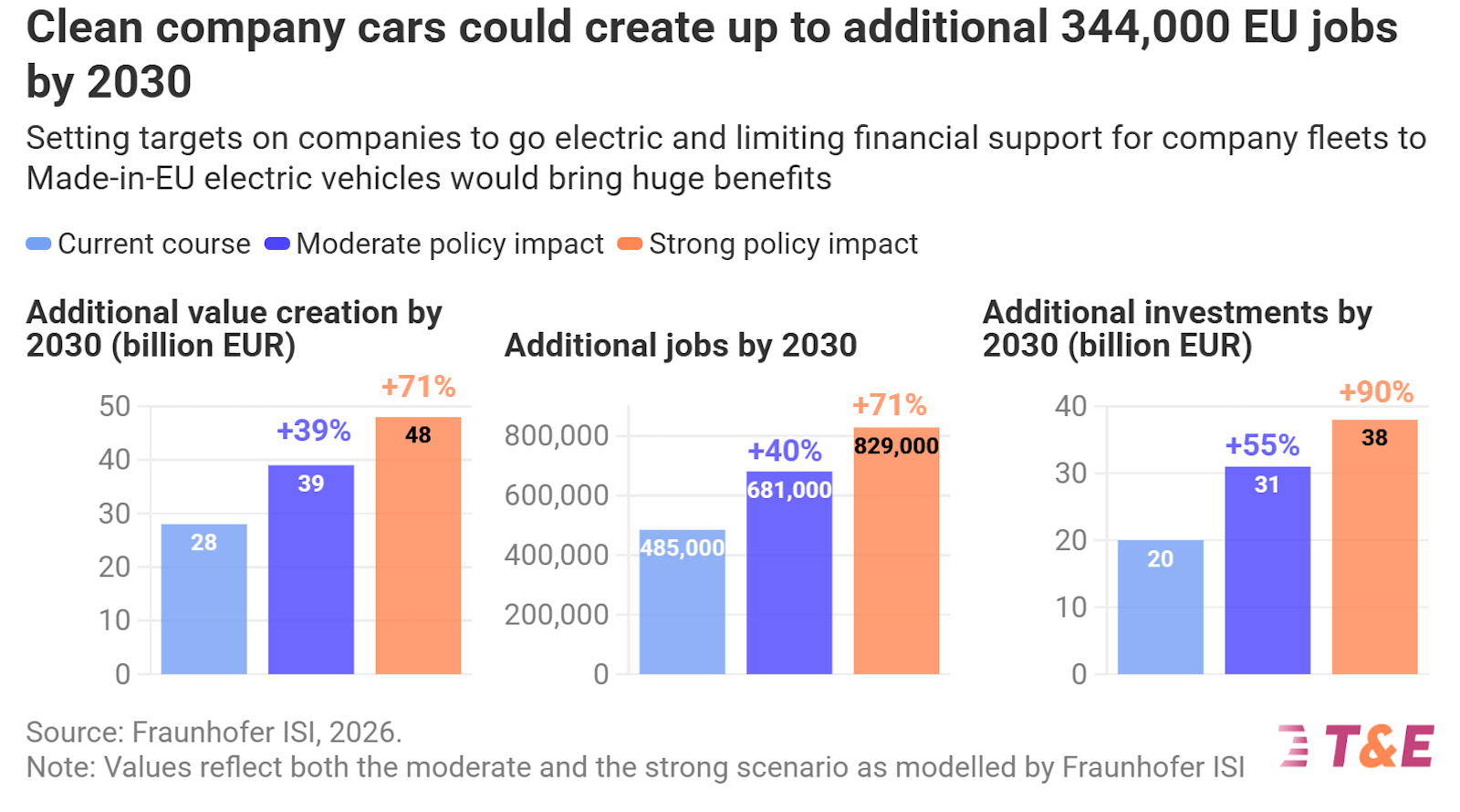
A new study indicates that mandating companies to switch to electric vehicles (EVs) for their fleets could generate 344,000 jobs in the European Union by 2030. The economic impact is projected to include €20 billion in gains and €18 billion in investments. However, the study emphasizes that financial support should be limited to electric cars that are manufactured in the EU.

Key takeaways
30-second read- 1Increased job opportunities in the EV sector could lead to a more robust market for electric vehicles, potentially influencing prices and availability.
- 2The focus on EU-made electric vehicles may affect the eligibility of certain models for incentives, impacting buyers' choices.
- 3As companies transition to electric fleets, there may be improvements in charging infrastructure, benefiting both company and private EV owners.
Confirmed
No official source linked yet
Reported
Secondary reporting: CleanTechnica
Verify yourself
Eligibility, local prices and dates for your car, state or utility
Transition to Electric Company Cars
A recent study highlights that a rapid transition to electric company cars in the European Union could create approximately 344,000 jobs by the year 2030. This shift is expected to generate significant economic benefits, including an estimated €20 billion in economic gains and an additional €18 billion in investments across the EU. The study advocates for setting targets that require companies to adopt electric vehicles (EVs) for their fleets, while also recommending that financial support be limited to electric cars that are both manufactured in the EU and meet specific sustainability criteria.
What Changed
The key change proposed by the study is the implementation of stricter regulations that would require companies to transition their vehicle fleets to electric models. This would not only support job creation but also stimulate economic growth within the EU. By focusing on electric vehicles that are produced within Europe, the study aims to bolster local manufacturing and reduce reliance on imported vehicles.
Why It Matters for Buyers and Owners
-
Job Opportunities: The creation of 344,000 jobs in the EV sector could lead to a more competitive market, potentially lowering prices and increasing the availability of electric vehicles for consumers.
-
Incentive Eligibility: The limitation of financial support to EU-made electric vehicles may impact the range of models available to buyers, as only those meeting these criteria would qualify for incentives.
-
Charging Infrastructure: As companies invest in electric fleets, there may be a corresponding increase in charging infrastructure, making it easier for both company and private EV owners to charge their vehicles conveniently.
Key Details from the Source Material
According to the study referenced by CleanTechnica, the push for electrification of company cars is not just an environmental initiative but also an economic strategy. By setting clear targets for large fleets and restricting fiscal benefits to only those electric vehicles that are made in Europe, the EU aims to foster a sustainable automotive industry. This approach is expected to stimulate job growth and investment in the sector, aligning with broader EU goals for sustainability and economic resilience.
What to Watch Next
As the EU considers implementing these recommendations, it will be important to monitor how these policies are developed and enacted. Key areas to watch include:
- Legislative Developments: Updates on any new regulations or incentives for electric company cars.
- Market Reactions: How manufacturers respond to potential changes in demand for EU-made electric vehicles.
- Infrastructure Investments: Progress in expanding charging networks to support the growing number of electric vehicles on the road.
In conclusion, the transition to electric company cars presents a significant opportunity for job creation and economic growth in the EU. However, the implications for consumers will depend on how these policies are structured and implemented in the coming years.
Sources
1 media- [1]Rapid Transition to Electric Company Cars Could Generate 344,000 EU Jobs by 2030 — StudyMedia
CleanTechnica · cleantechnica.com · published Oct 20
Newsletter
Weekly EV signal. No spam.
Comments
Log in with
Loading comments…