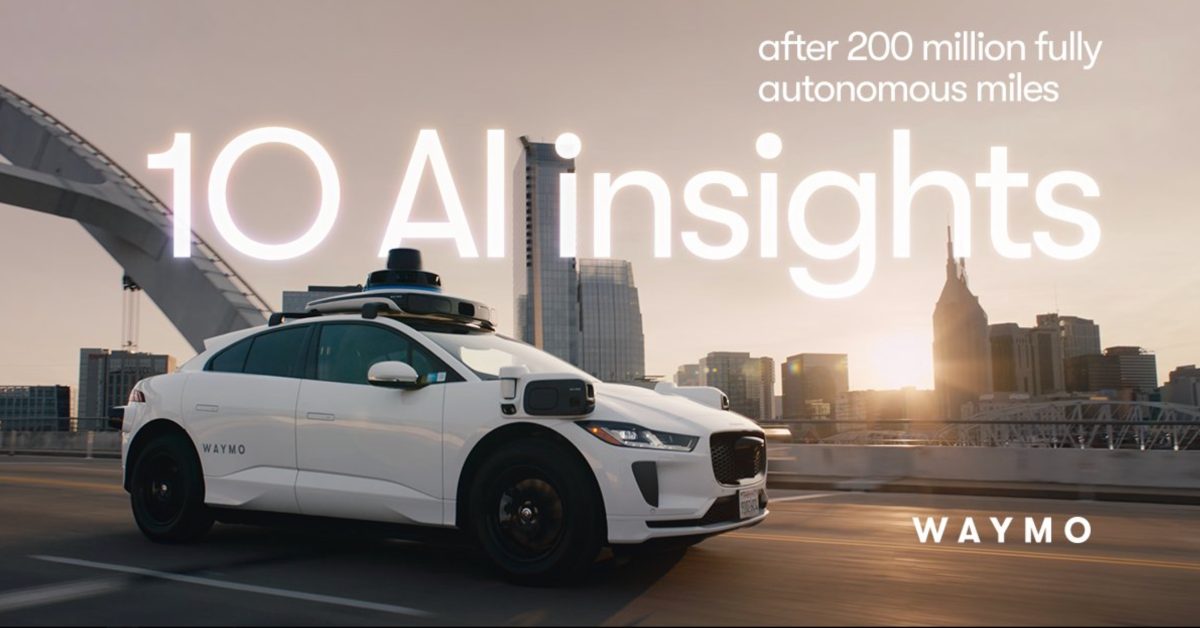
Waymo Critiques Tesla's Self-Driving Approach as a 'False Summit'
Updated August 27, 2026
3 min read
1 linked source
Waymo has released a list of '10 AI lessons' derived from its experience driving over 200 million fully autonomous miles, indirectly criticizing Tesla's Full Self-Driving (FSD) strategy. The company argues that attempting to evolve a driver-assist system into full autonomy is a 'false summit.' This statement raises questions about the viability of Tesla's current self-driving technology and its implications for consumers.
Share this story
Why it matters
- ✓Waymo's critique suggests that Tesla's FSD may not achieve true autonomy, potentially impacting consumer confidence in the technology.
- ✓Buyers considering Tesla's self-driving features might reassess their expectations and the associated costs if full autonomy is not realized.
- ✓The ongoing debate between Waymo and Tesla could influence future regulations and standards for self-driving technology.
Reporting notes
EV Signal briefs are written to explain the verified change first, then add the context EV buyers and owners need to understand cost, availability, charging access, eligibility, or ownership impact.
If details are still developing, we try to say what is confirmed, what comes from secondary reporting, and what readers should verify before acting.
Source mix
1 linked source
1 media
Reviewed from: Electrek.
Waymo Critiques Tesla's Self-Driving Approach
Waymo has taken a significant stance against Tesla's self-driving technology by labeling its approach a 'false summit.' This statement comes in the wake of Waymo's publication of '10 AI lessons' learned from its extensive experience with fully autonomous driving, totaling over 200 million miles. While Waymo does not explicitly name Tesla in its critique, the implications are clear, especially regarding Tesla's Full Self-Driving (FSD) system.
What Changed
Waymo's recent insights highlight a fundamental difference in philosophy regarding the development of self-driving technology. The company argues that trying to convert a driver-assist system into a fully autonomous one is misguided. This critique is particularly relevant as Tesla continues to promote its FSD capabilities, which many consumers view as a step toward full autonomy. Waymo's assertion raises doubts about the effectiveness and safety of Tesla's current self-driving features.
Why It Matters for Buyers and Owners
-
Consumer Confidence: Waymo's critique may lead potential buyers to reconsider their confidence in Tesla's self-driving technology. If the technology is not as advanced as advertised, consumers might be hesitant to invest in it.
-
Expectations and Costs: Buyers looking at Tesla's FSD feature may need to adjust their expectations regarding its capabilities. If full autonomy is not achievable, the perceived value of the feature may diminish, impacting its pricing and desirability.
-
Regulatory Implications: The ongoing discourse between Waymo and Tesla could influence future regulations surrounding self-driving technologies. As public perception shifts, regulatory bodies may impose stricter standards that affect all manufacturers, including Tesla.
Key Details from Source Material
According to the source from Electrek, Waymo's list of '10 AI lessons' serves as a reflection of its extensive experience in the autonomous driving sector. The company emphasizes that the journey toward full autonomy is complex and cannot be achieved simply by enhancing existing driver-assist systems. This perspective contrasts sharply with Tesla's approach, which aims to market its FSD as a near-future solution for fully autonomous driving.
Waymo's assertion that attempting to transition from driver-assist to full autonomy is a 'false summit' suggests that there are significant technological and safety hurdles that remain unaddressed. This statement is particularly poignant as Tesla continues to roll out updates and improvements to its FSD software, which some users have reported as being inconsistent in performance.
What to Watch Next
As the debate between Waymo and Tesla unfolds, it will be crucial to monitor how both companies respond to each other's claims. Future developments may include:
- Technological Advancements: Watch for updates from both companies regarding their self-driving technologies and any new features they may introduce.
- Consumer Reactions: Pay attention to how potential buyers and current Tesla owners react to Waymo's critique and whether it influences their purchasing decisions.
- Regulatory Changes: Keep an eye on any new regulations or guidelines that may emerge as a result of the ongoing discussions about self-driving technology.
In conclusion, Waymo's critique of Tesla's self-driving strategy raises important questions about the future of autonomous vehicles. As both companies continue to innovate, the implications for consumers and the industry as a whole will be significant.
Sources
These are the documents and reports used to build this brief so readers can verify the story directly.
Comments
Log in with
Loading comments…
More in Software
Mercedes Partners with Wayve for Advanced Driver Assistance System
Mercedes-Benz has announced a collaboration with Wayve to develop a driver assistance system…
1d ago
Tesla Full Self-Driving Update Issues False Camera Alerts
Tesla's latest Full Self-Driving update, version 14.3.9, is erroneously alerting owners that their…
1d ago
Mercedes-Benz Partners with Wayve for AI Driver Integration in Future Vehicles
Mercedes-Benz has finalized a production agreement with Wayve, a British self-driving startup, to…
1d ago
Tesla Cybercab Faces Navigation Issues Similar to Existing Tesla Models
Tesla's new Cybercab robotaxis are reportedly experiencing navigation problems, taking unusual…
2d ago