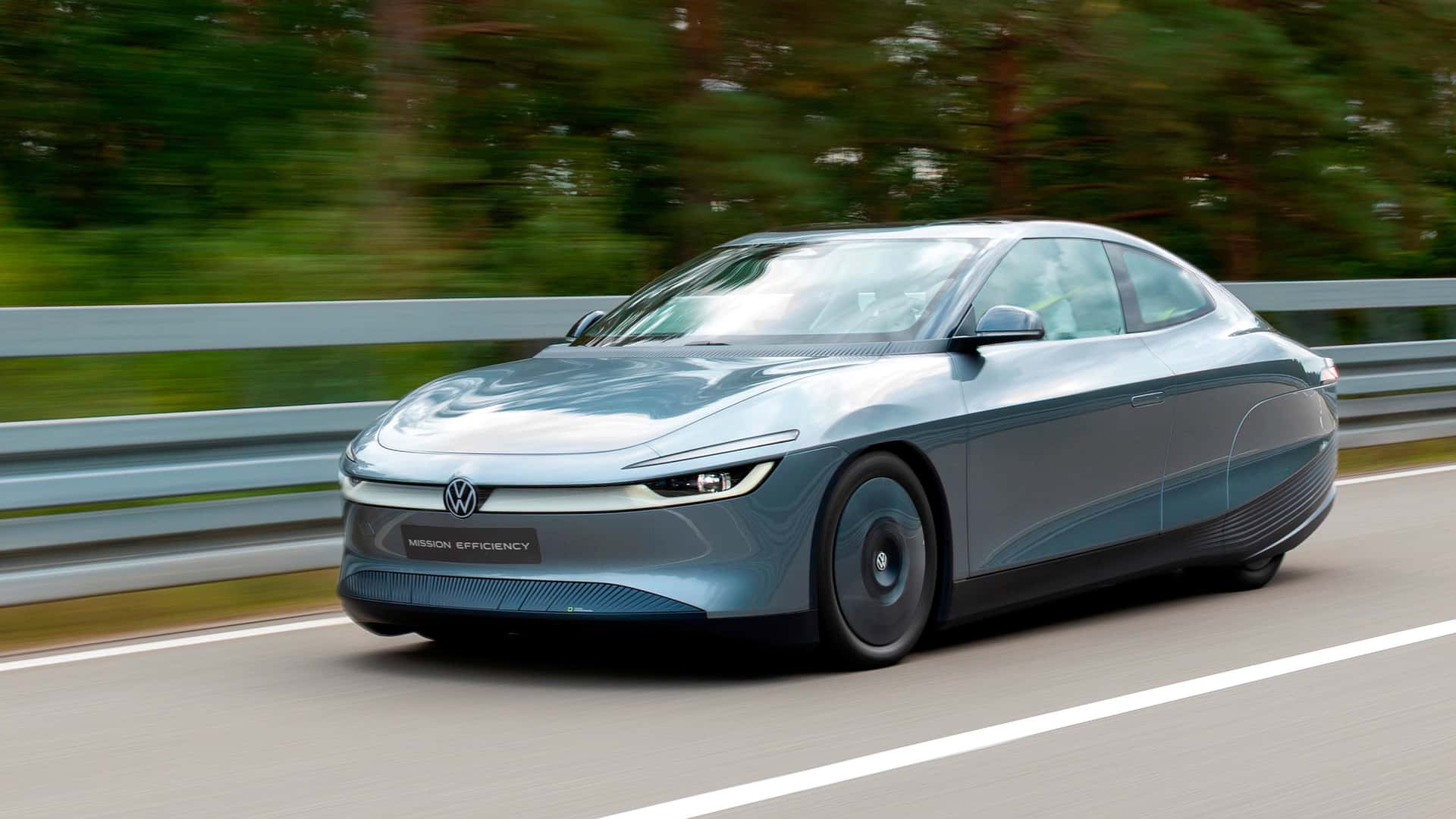
Volkswagen Unveils Mission Efficiency EV Capable of Over 9 Miles/kWh
Updated September 14, 2026
3 min read
1 linked source
Volkswagen has introduced the 'near-production' Mission Efficiency electric vehicle (EV), which boasts an impressive efficiency rating of over 9 miles per kilowatt-hour (kWh). This model shares its platform with the ID. Polo but enhances energy efficiency significantly. Details on pricing and availability remain unclear.
Share this story
Why it matters
- ✓The high efficiency could lead to lower ownership costs for EV buyers, as it maximizes range per charge.
- ✓Potential buyers may benefit from reduced charging frequency, enhancing convenience for daily use.
- ✓The introduction of this model could influence market competition, prompting other manufacturers to improve their efficiency ratings.
Reporting notes
EV Signal briefs are written to explain the verified change first, then add the context EV buyers and owners need to understand cost, availability, charging access, eligibility, or ownership impact.
If details are still developing, we try to say what is confirmed, what comes from secondary reporting, and what readers should verify before acting.
Source mix
1 linked source
1 media
Reviewed from: InsideEVs.
Volkswagen's Mission Efficiency EV
Volkswagen has unveiled its 'near-production' Mission Efficiency electric vehicle (EV), which is designed to achieve an impressive efficiency of over 9 miles per kilowatt-hour (kWh). This model builds upon the platform of the ID. Polo, but it takes energy efficiency to a new level, potentially setting a benchmark in the EV market.
What Changed?
The key change is the introduction of the Mission Efficiency EV, which promises to deliver more than 9 miles per kWh, a significant improvement in efficiency compared to many current EV offerings. This model is positioned as a near-production vehicle, suggesting that it could be available to consumers in the near future, although specific details regarding its launch timeline and pricing have not yet been disclosed.
Why It Matters for Buyers and Owners
- Lower Ownership Costs: The high efficiency rating means that owners could travel further on a single charge, which may translate to lower overall energy costs and less frequent charging.
- Convenience: With the ability to travel more miles per kWh, drivers might find it easier to manage their daily driving needs without the constant worry of recharging.
- Market Influence: The introduction of the Mission Efficiency EV could push other manufacturers to enhance their own models' efficiency, potentially leading to a broader improvement in the EV market overall.
Key Details from Source Material
According to InsideEVs, the Mission Efficiency EV is based on the same underpinnings as the ID. Polo, which is already known for its compact design and urban suitability. The focus on efficiency in this new model reflects Volkswagen's commitment to advancing electric mobility and addressing consumer concerns about range and charging frequency.
While the efficiency figures are promising, it is important to note that further details on the vehicle's pricing, availability, and specific features have not yet been confirmed. As the automotive industry continues to evolve, these aspects will be crucial for potential buyers.
What to Watch Next
As Volkswagen moves closer to production, it will be important to monitor announcements regarding the Mission Efficiency EV's pricing and availability. Additionally, any updates on performance specifications and features will help consumers make informed decisions. Keep an eye on Volkswagen's official communications and industry news for the latest developments regarding this innovative model.
Sources
These are the documents and reports used to build this brief so readers can verify the story directly.
- Volkswagen Just Unveiled An EV That Can Do Over 9 Miles/kWh — InsideEVsMEDIA
Comments
Log in with
Loading comments…
More in Models & Pricing
Renault 8 Gordini Returns as Rear-Wheel Drive EV
Renault has unveiled the return of the iconic Renault 8 Gordini as a rear-wheel drive electric…
Just now
Bentley's First EV, the Torcal, Offers Rapid Charging Capabilities
Bentley has launched its first electric vehicle, the Torcal, a midsize SUV that boasts rapid…
12h ago
Fiat Grande Panda Outperforms Claimed Range in Real-World Test
In a recent highway range test, the Fiat Grande Panda exceeded its officially claimed range,…
12h ago
Bentley Launches Torcal, Its First All-Electric SUV
Bentley has officially unveiled the Torcal, marking its entry into the electric vehicle market.…
12h ago