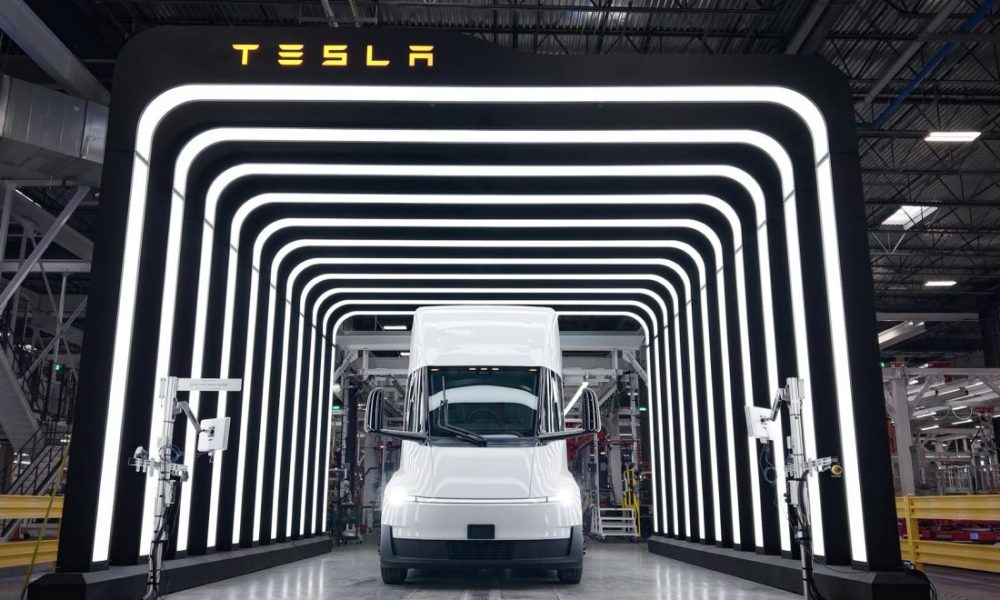
Tesla Implements Fully Automated Production for Semi Trucks

Edited by Volta Kessrin
Models, Pricing & Buying
Updated September 29, 2026
3 min read
1 linked source
Tesla has adopted a 'no human contact' approach for the production of its all-electric Semi trucks, utilizing a fully automated system for the 4680 battery cells. This change affects the manufacturing process at Giga Texas and the new Semi Factory in Sparks, Nevada, aiming for high-volume production. The full implications for buyers and owners are still unfolding.
Share this story
Why it matters
- ✓The fully automated production process may lead to increased efficiency and potentially lower costs for the Semi, which could benefit buyers.
- ✓As production ramps up, availability of the Semi may improve, making it easier for fleet operators and individual buyers to purchase.
- ✓The shift to automation may affect the timeline for deliveries and the overall reliability of the manufacturing process.
Tesla's No Human Contact Approach
Tesla has officially implemented a 'no human contact' approach in the production of its all-electric Semi trucks. This strategy involves a fully automated pipeline for the 4680 battery cells, which are crucial for the Semi's performance. The production process spans from Giga Texas to the new dedicated Semi Factory in Sparks, Nevada, where the batteries are produced, shipped, and consumed directly on the production line.
What Changed
At the Semi Handover event on September 24, Tesla outlined its innovative production method, emphasizing the complete automation of the manufacturing process. This marks a significant shift in how Tesla approaches production, particularly for its heavy-duty electric trucks. The fully automated system is designed to enhance efficiency and streamline operations, reducing the need for human intervention in the production line.
Why It Matters for Buyers and Owners
-
Potential Cost Benefits: By automating the production process, Tesla may be able to reduce manufacturing costs, which could translate into more competitive pricing for the Semi trucks. This is particularly important for fleet operators looking to minimize expenses.
-
Improved Availability: As Tesla ramps up production capabilities, the availability of the Semi is likely to increase. This could make it easier for both individual buyers and businesses to acquire the vehicle, addressing previous concerns about supply shortages.
-
Reliability of Production: The shift to a fully automated system may enhance the reliability of the manufacturing process, potentially leading to more consistent delivery timelines and product quality. However, the full impact of this change on delivery schedules and production reliability remains to be seen.
Key Details from Source Material
According to Teslarati, the 'no human contact' approach is part of Tesla's broader strategy to innovate in the electric vehicle space, particularly with the Semi. The company aims to leverage automation to achieve high-volume production, which is critical as demand for electric trucks continues to grow. The 4680 battery cells are a key component of this strategy, as they are designed to improve the performance and range of the Semi.
What to Watch Next
As Tesla continues to refine its automated production processes, it will be important to monitor how these changes affect production timelines and delivery schedules for the Semi. Additionally, updates on pricing and availability will be crucial for potential buyers and fleet operators. Tesla's ongoing commitment to automation may also set a precedent for other manufacturers in the electric vehicle market, influencing industry standards and practices.
In summary, Tesla's move towards a fully automated production line for the Semi represents a significant step in its manufacturing evolution. While the immediate effects on pricing and availability are still uncertain, the potential benefits for buyers and owners are noteworthy.
Sources
These are the documents and reports used to build this brief so readers can verify the story directly.
- Tesla has a ‘no human contact’ approach for Semi production — TeslaratiMEDIA
Reporting notes
EV Signal briefs are written to explain the verified change first, then add the context EV buyers and owners need to understand cost, availability, charging access, eligibility, or ownership impact.
If details are still developing, we try to say what is confirmed, what comes from secondary reporting, and what readers should verify before acting.
Source mix
1 linked source
1 media
Reviewed from: Teslarati.
Comments
Log in with
Loading comments…
More in Models & Pricing

Tesla Delays Roadster 2 Event Again Due to Bad Weather
Tesla has postponed the highly anticipated Roadster 2 event due to adverse weather conditions. The…
1h ago

Toyota's North American Executive Discusses EV Strategy and Challenges
Toyota's North American product planning executive reflects on the company's journey in the…
1h ago

Kia Unveils New Interior with Larger Infotainment Screen and Hyundai Software
Kia is set to introduce a revamped interior for its upcoming vehicles, featuring a larger center…
1h ago

Tesla Delays Roadster Demo to October 15 Due to Weather Conditions
Tesla has postponed its highly anticipated Roadster demo from October 1 to October 15, citing…
1h ago