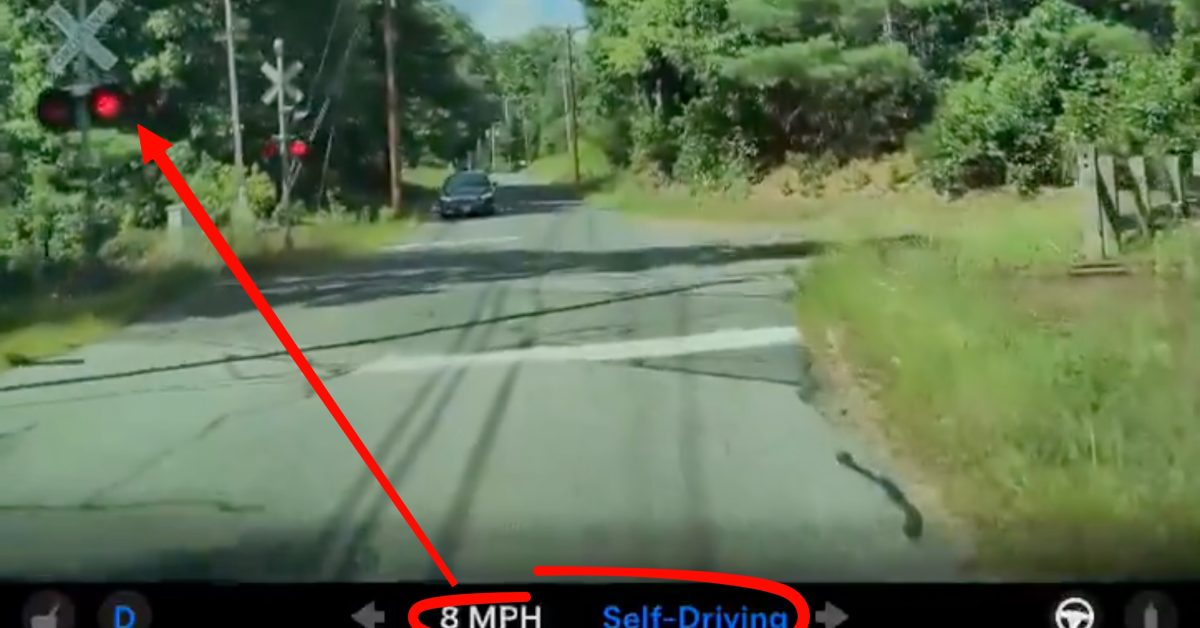
Tesla Full Self-Driving Fails to Stop at Railroad Crossing
Updated August 28, 2026
3 min read
1 linked source
A Tesla equipped with the latest version of Full Self-Driving (FSD) software, v14.3.7, nearly collided with a train at an active railroad crossing. This incident marks at least the third occurrence this year where Tesla's FSD has attempted to drive into a train, raising concerns about the software's reliability in critical situations.
Share this story
Why it matters
- ✓Safety concerns may deter potential buyers from investing in Tesla's Full Self-Driving technology.
- ✓Repeated incidents of FSD failing to recognize critical hazards like trains could impact Tesla's reputation and consumer trust.
- ✓Owners relying on FSD for everyday driving may need to remain vigilant, as the software's limitations in certain scenarios could pose risks.
Reporting notes
EV Signal briefs are written to explain the verified change first, then add the context EV buyers and owners need to understand cost, availability, charging access, eligibility, or ownership impact.
If details are still developing, we try to say what is confirmed, what comes from secondary reporting, and what readers should verify before acting.
Source mix
1 linked source
1 media
Reviewed from: Electrek.
Tesla Full Self-Driving Fails to Stop at Railroad Crossing
A Tesla running the latest version of Full Self-Driving (FSD), specifically v14.3.7, failed to stop at an active railroad crossing this week, nearly resulting in a collision with a passing train. This alarming incident was reported by the driver and corroborated by dashcam footage. Notably, this marks at least the third documented instance this year where Tesla's FSD has attempted to drive into a train.
What Changed
The recent incident highlights a significant flaw in Tesla's Full Self-Driving software, particularly its ability to recognize and respond to critical hazards such as active railroad crossings. Despite being the latest version, FSD v14.3.7 demonstrated a dangerous oversight that could have led to severe consequences.
Why It Matters for Buyers and Owners
- Safety Concerns: The repeated failures of FSD to navigate around trains may raise serious safety concerns for current and prospective Tesla owners. This could lead to hesitance in adopting or relying on the technology.
- Impact on Reputation: Incidents like these can tarnish Tesla's reputation as a leader in autonomous driving technology, potentially affecting sales and customer trust.
- Vigilance Required: Owners utilizing FSD for everyday driving may need to remain extra vigilant, as the software's limitations in recognizing critical hazards could pose risks to their safety and that of others on the road.
Key Details from Source Material
According to Electrek, the incident occurred recently and was captured on dashcam footage, showcasing the FSD's failure to stop at the railroad crossing. This is not an isolated event; it marks the third time this year that the software has attempted to drive into a train, raising alarms about its reliability and safety features. The fact that this occurred with the latest software version suggests that the issues may not be easily resolved through updates.
What to Watch Next
As this situation develops, it will be important to monitor Tesla's response to these incidents and any updates they may provide regarding the safety of their Full Self-Driving technology. Additionally, potential regulatory scrutiny could arise as authorities assess the implications of such failures in autonomous driving systems. Owners and prospective buyers should stay informed about any changes or improvements made to the FSD software to ensure their safety and confidence in Tesla's technology.
Sources
These are the documents and reports used to build this brief so readers can verify the story directly.
- Tesla Full Self-Driving likes trains a bit too much — ElectrekMEDIA
Comments
Log in with
Loading comments…
More in Software
Mercedes Partners with Wayve for Advanced Driver Assistance System
Mercedes-Benz has announced a collaboration with Wayve to develop a driver assistance system…
1d ago
Tesla Full Self-Driving Update Issues False Camera Alerts
Tesla's latest Full Self-Driving update, version 14.3.9, is erroneously alerting owners that their…
1d ago
Mercedes-Benz Partners with Wayve for AI Driver Integration in Future Vehicles
Mercedes-Benz has finalized a production agreement with Wayve, a British self-driving startup, to…
1d ago
Tesla Cybercab Faces Navigation Issues Similar to Existing Tesla Models
Tesla's new Cybercab robotaxis are reportedly experiencing navigation problems, taking unusual…
2d ago