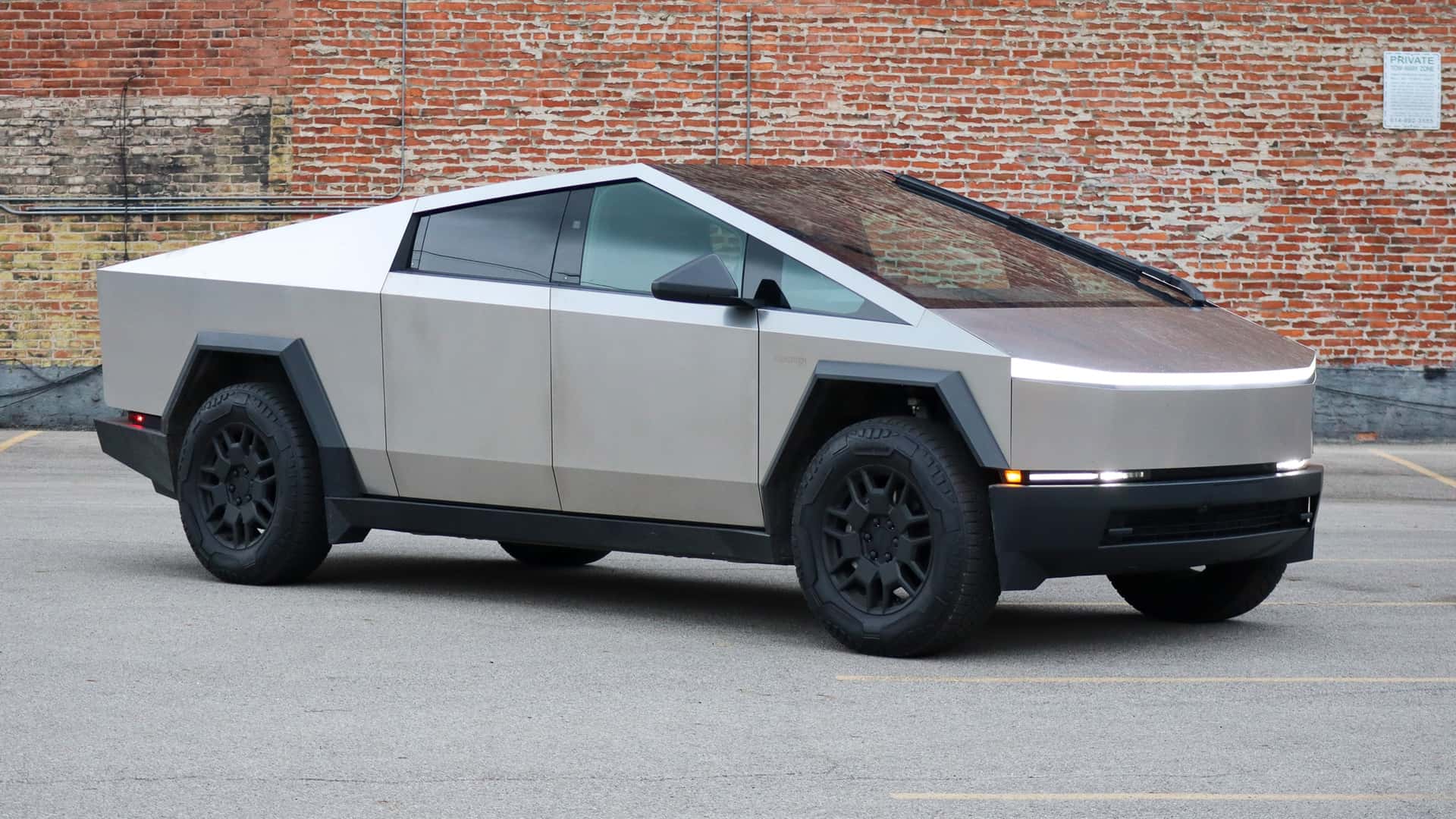
Tesla Cybercab Lacks Home Charging Options
Tesla's new Cybercab, priced at $29,990, cannot charge at home since it lacks an onboard charger and relies solely on DC fast charging. Buyers will need to rely on Superchargers or wait for Tesla's promised wireless charging solution, which has yet to be released. This limitation raises concerns for individual owners who may not have easy access to fast charging stations.

Key takeaways
30-second read- 1Buyers must rely on Superchargers for charging, limiting home charging options.
- 2The absence of an onboard charger means higher dependency on public charging infrastructure.
- 3Potential delays in the availability of Tesla's wireless charging pad could affect convenience for owners.
Confirmed
No official source linked yet
Reported
Secondary reporting: Electrek
Verify yourself
Eligibility, local prices and dates for your car, state or utility

Tesla's recently unveiled Cybercab, priced at $29,990, presents significant challenges for home charging. Unlike traditional electric vehicles, the Cybercab lacks an onboard charger, meaning it can only utilize DC fast charging stations. This design choice aligns with Tesla's vision of the Cybercab as a fleet vehicle, intended primarily for commercial use rather than individual ownership.
What changed
The Cybercab was introduced with the promise of innovative charging solutions, including a wireless charging pad that Tesla has been teasing since 2023. However, as of now, this wireless charging option is not available for purchase. Instead, the Cybercab is equipped with a NACS charge port that allows it to connect to DC fast chargers, such as Tesla's Superchargers. This means that individual owners will not have the convenience of charging at home unless they have access to public charging infrastructure.
Why it matters for buyers and owners
- Limited charging options: Without an onboard charger, Cybercab owners cannot use standard home charging solutions like Wall Connectors or Level 2 chargers. This significantly limits their ability to charge the vehicle conveniently at home.
- Dependence on public infrastructure: Buyers will need to rely heavily on Tesla's Supercharger network, which may not be as accessible for everyone, particularly those living far from charging stations.
- Uncertain future for wireless charging: Tesla's wireless charging pad, which could solve many of these issues, has no confirmed release date, leaving buyers in a state of uncertainty regarding their charging options.
Key details
Tesla's Cybercab is designed without an onboard charger, which means it cannot convert AC power from home outlets into the DC power needed to charge its battery. This design is intended to reduce costs and complexity for fleet operations, but it poses significant challenges for individual owners. The vehicle's autonomy agreement also places the responsibility of charging on the owner, further complicating the situation.
The Cybercab's order agreement specifies that charging must be done at DC fast charging stations, and it explicitly states that owners must be present during charging sessions. This means that owners cannot simply send their Cybercab to a Supercharger unattended, which is a major drawback for a vehicle marketed as a self-driving car.
What to watch next
As Tesla approaches the estimated delivery date for the Cybercab in December, the company faces pressure to launch its wireless charging solution. If the wireless charging pad is not available by then, buyers will need to adapt to a new reality of charging their vehicles exclusively at Superchargers. Additionally, Tesla's plans for fleet depots with charging stations may eventually extend to individual owners, but the logistics of this remain unclear.
In the meantime, alternative options like the Sigenergy 25 kW bidirectional DC charger and the upcoming Lunar Energy 25 kW home DC charger offer potential solutions for those looking to charge at home, albeit with their own limitations.
Buying guide: Best Level 2 Home EV Charger (2026): How to Choose
Sources
1 media- [1]Tesla needs wireless charging fast, or its $30,000 Cybercab can’t charge at homeMedia
Electrek · electrek.co · published Nov 17
Newsletter
Weekly EV signal. No spam.
Comments
Log in with
Loading comments…