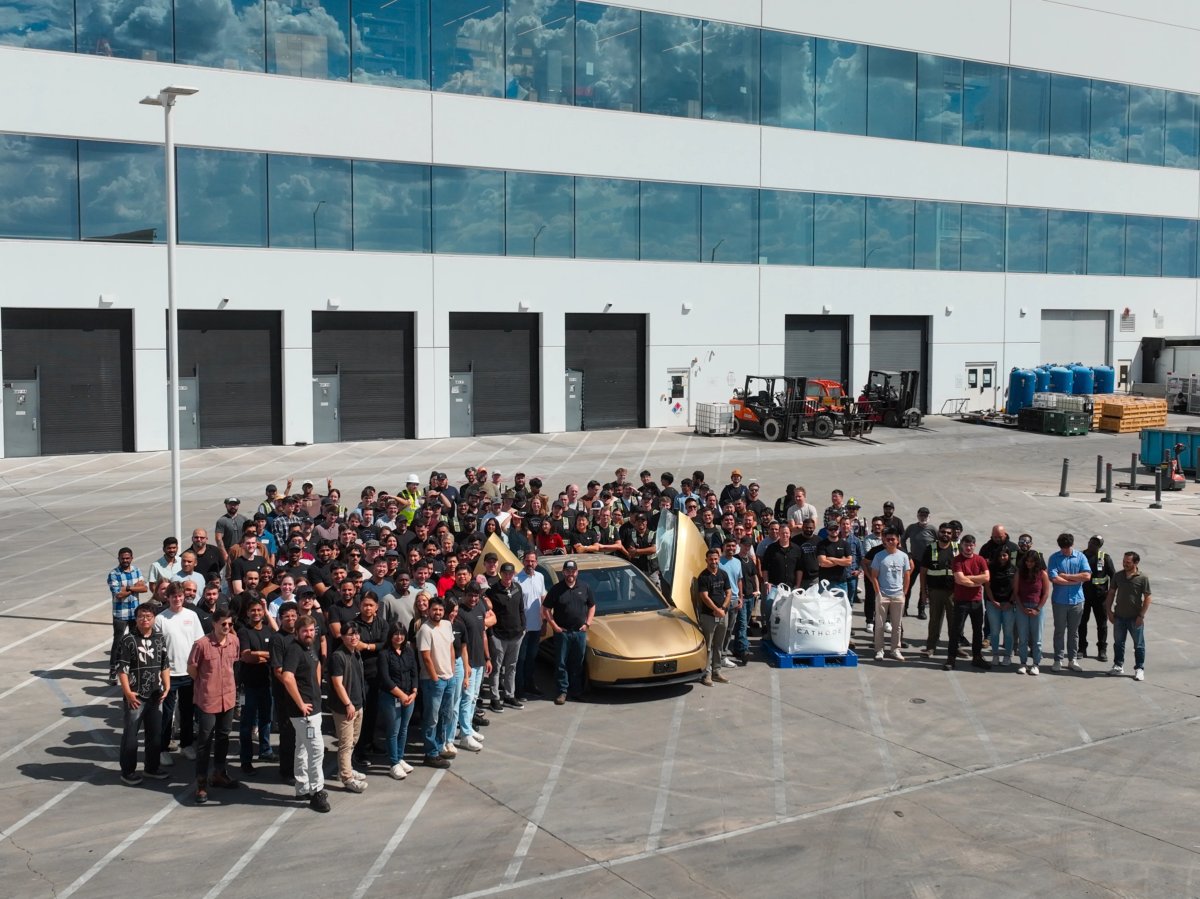
Tesla Builds First Cybercab Using In-House Battery Materials

Edited by Volta Kessrin
Models, Pricing & Buying
Updated September 25, 2026
3 min read
1 linked source
Tesla has officially produced its first Cybercab, which is powered by cathode battery materials manufactured entirely in-house at Gigafactory Texas. This development marks a significant step in Tesla's efforts to enhance its supply chain and reduce dependency on external battery material sources. However, further details about the production scale and availability of the Cybercab remain unclear.
Share this story
Why it matters
- ✓In-house battery production may lead to cost savings for Tesla, potentially affecting the pricing of future models.
- ✓This development could improve the availability of the Cybercab, as Tesla aims to streamline its production processes.
- ✓Enhanced battery supply chain control may lead to better performance and reliability for EV owners.
Tesla's First Cybercab Production
Tesla has officially rolled out its first production Cybercab, which is notable for being powered by cathode battery materials produced entirely in-house at Gigafactory Texas. This marks a pivotal moment for Tesla as it seeks to strengthen its supply chain and reduce reliance on external battery material sources.
What Changed
The production of the Cybercab represents a significant milestone for Tesla, showcasing the company's commitment to vertical integration in its manufacturing processes. By utilizing in-house battery materials, Tesla aims to enhance its operational efficiency and potentially lower production costs. The Cybercab is expected to serve as a key player in Tesla's expanding vehicle lineup, particularly in the ride-hailing and transportation sectors.
Why It Matters for Buyers and Owners
- Cost Savings: With in-house battery production, Tesla may achieve cost reductions that could be passed on to consumers, making EVs more affordable in the long run.
- Availability: Streamlined production processes may lead to increased availability of the Cybercab, allowing more consumers to access this innovative vehicle.
- Performance and Reliability: By controlling the battery supply chain, Tesla could enhance the performance and reliability of its vehicles, which is crucial for current and prospective EV owners.
Key Details from Source Material
According to the report from Not a Tesla App, the Cybercab is the first of its kind to utilize battery materials sourced from within Tesla's own operations. This strategic move is part of Tesla's broader goal to optimize its manufacturing capabilities and reduce costs associated with sourcing materials from third-party suppliers. While the initial production has commenced, further details regarding the scale of production and the timeline for wider availability of the Cybercab are still pending.
What to Watch Next
As Tesla continues to ramp up production at Gigafactory Texas, it will be important to monitor updates regarding the Cybercab's availability and pricing. Additionally, any announcements related to Tesla's future plans for in-house battery production and its impact on the overall EV market will be crucial for buyers and owners alike. Keep an eye on Tesla's official communications and industry news for the latest developments.
Sources
These are the documents and reports used to build this brief so readers can verify the story directly.
- Tesla Builds First Cybercab Using In-House Battery Materials — Not a Tesla AppMEDIA
Reporting notes
EV Signal briefs are written to explain the verified change first, then add the context EV buyers and owners need to understand cost, availability, charging access, eligibility, or ownership impact.
If details are still developing, we try to say what is confirmed, what comes from secondary reporting, and what readers should verify before acting.
Source mix
1 linked source
1 media
Reviewed from: Not a Tesla App.
Comments
Log in with
Loading comments…
More in Models & Pricing

BMW 7 Series Showcased at Contemporary Istanbul with A.A.Murakami’s Installation
The new BMW 7 Series was prominently featured at the Contemporary Istanbul art fair, where…
1h ago

ROHM’s SiC MOSFETs Integrated into BMW’s Neue Klasse Electric Powertrain
ROHM Semiconductor's silicon carbide (SiC) MOSFETs have been incorporated into the electric…
1h ago

Saudi Arabia's Ceer Unveils Futuristic Exobot EVs Set for 2027 Launch
Saudi startup Ceer has announced the upcoming release of two electric vehicle models, the Exobot…
1h ago

Rivian’s R2 Achieves Climate Goals Four Years Ahead of Schedule
Rivian's R2 vehicle has successfully met its target of a 50% lifetime carbon reduction four years…
1h ago