PJM, ERCOT, and SWPP Set New Peak Load Records This Summer

Edited by Ionna Brakeley
Charging & Ownership
Updated October 16, 2026
3 min read
1 linked source
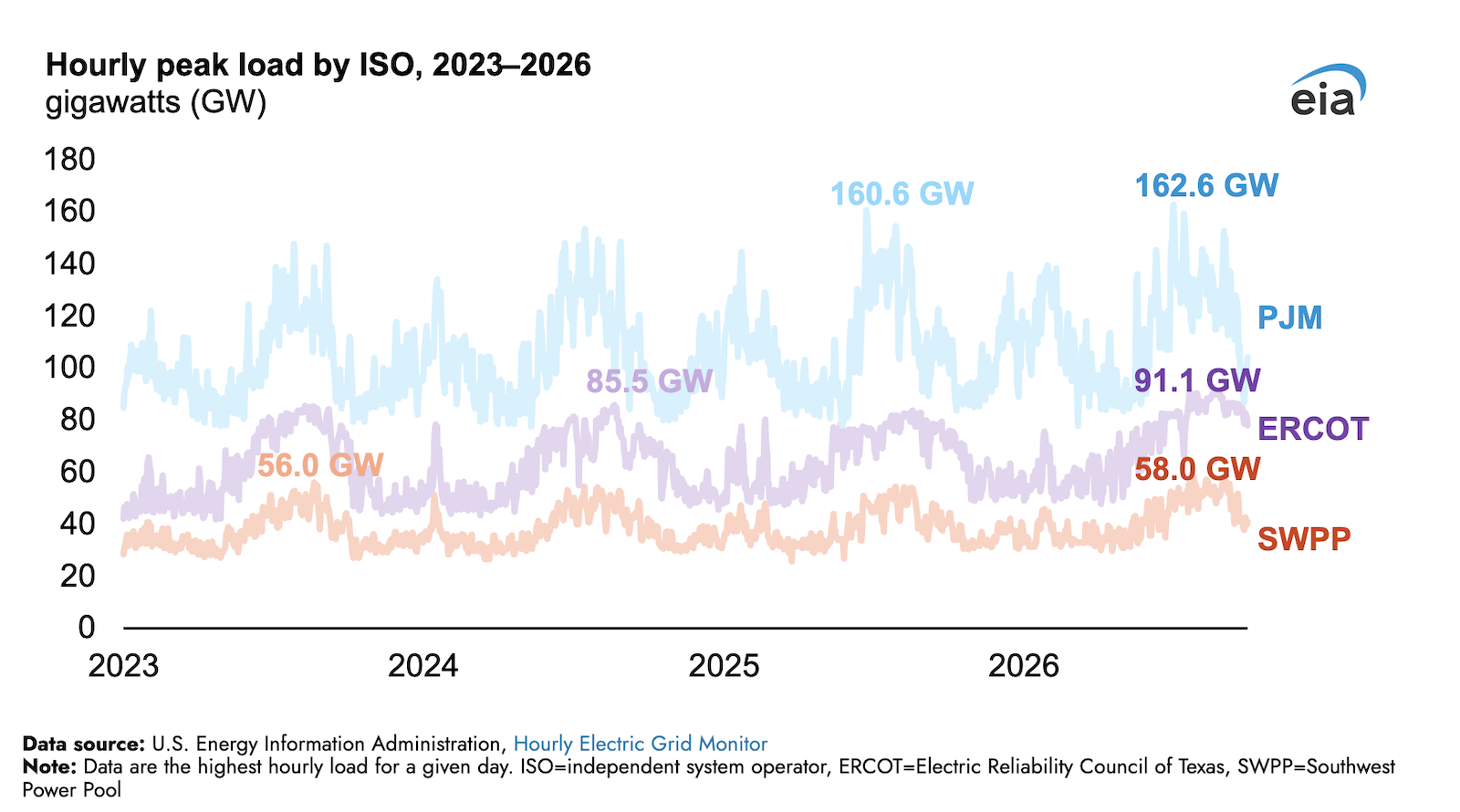
This summer, three regional transmission organizations (RTOs) in the United States—PJM, ERCOT, and SWPP—recorded their highest peak hourly loads to date. PJM reached a peak of 162.6 gigawatts (GW) on July 2, 2026, surpassing its previous record of 160.6 GW. These changes could impact electricity availability and pricing for EV buyers and owners in these regions.
Share this story
Why it matters
- ✓Increased peak loads may lead to higher electricity prices during peak hours, affecting charging costs for EV owners.
- ✓Potential strain on the grid could impact the reliability of charging access, especially during high demand periods.
- ✓EV buyers in these regions should be aware of possible fluctuations in electricity availability and costs.
PJM, ERCOT, and SWPP Set New Peak Load Records This Summer
This summer, three regional transmission organizations (RTOs) in the United States—PJM, ERCOT, and SWPP—recorded their highest peak hourly loads to date. According to data reported on Form EIA-930 and presented in the Hourly Electric Grid Monitor, PJM reached a peak of 162.6 gigawatts (GW) on July 2, 2026, surpassing its previous record of 160.6 GW. This significant increase in demand raises important considerations for electric vehicle (EV) buyers and owners in these regions.
What Changed
The peak load records were set during a summer characterized by high temperatures and increased electricity demand. PJM's new peak of 162.6 GW reflects a 1.3% increase over its prior record, indicating a growing demand for electricity in the region. While specific figures for ERCOT and SWPP were not detailed in the source material, their inclusion suggests similar trends of rising electricity demand across these RTOs.
Why It Matters for Buyers and Owners
The increase in peak load records can have several implications for EV buyers and owners:
- Electricity Pricing: Higher peak loads can lead to increased electricity prices during peak hours. EV owners who charge their vehicles during these times may see a rise in their charging costs, impacting overall ownership expenses.
- Charging Access: The strain on the grid due to high demand could affect the reliability of charging infrastructure. EV owners may experience longer wait times or limited access to charging stations during peak usage periods.
- Awareness for Buyers: Prospective EV buyers should consider the implications of increased electricity demand in their region. Understanding potential fluctuations in electricity availability and costs can help them make informed decisions about their purchase and charging habits.
Key Details from Source Material
The data reported indicates that PJM's peak load record was set on July 2, 2026, marking a notable increase from previous years. The report does not provide specific figures for ERCOT and SWPP, but their mention alongside PJM suggests that they too are experiencing significant increases in electricity demand. This trend is likely to continue as more consumers adopt electric vehicles and demand for electricity rises.
What to Watch Next
As the summer season comes to an end, it will be important to monitor how these peak load records affect electricity pricing and availability in the coming months. Stakeholders in the EV market, including buyers and owners, should stay informed about any new developments regarding grid capacity and electricity rates. Additionally, watching for any responses from utility companies or regulatory bodies regarding infrastructure improvements or demand management strategies will be crucial in understanding the long-term implications of these peak load records.
Sources
These are the documents and reports used to build this brief so readers can verify the story directly.
- PJM, ERCOT, and SWPP All Set Peak Load Records This Summer — CleanTechnicaMEDIA
Reporting notes
EV Signal briefs are written to explain the verified change first, then add the context EV buyers and owners need to understand cost, availability, charging access, eligibility, or ownership impact.
If details are still developing, we try to say what is confirmed, what comes from secondary reporting, and what readers should verify before acting.
Source mix
1 linked source
1 media
Reviewed from: CleanTechnica.
Newsletter
Weekly EV signal. No spam.
Comments
Log in with
Loading comments…
More in Charging
Wind Generation in ISO-NE Increases by 68% Compared to Last Year
In the first nine months of 2026, wind generation in ISO New England (ISO-NE) has seen a…
Just now

Emaldo Launches ZOE Fast Charging Station with Solar Power in Sweden
Emaldo has opened a new DC fast charging site in Rockneby, Sweden, featuring ZOE Energy Storage's Z…
6h ago

AC Charging Standard J3068 Offers 50 kW Without DC Charger for EV Fleets
The J3068 charging standard allows electric vehicle (EV) fleets to achieve charging speeds of 50 kW…
6h ago
Revolution Wind Begins Powering New England Amid Trump Administration's Legal Challenge
Revolution Wind has commenced electricity generation in New England, with all 65 turbines now…
1d ago