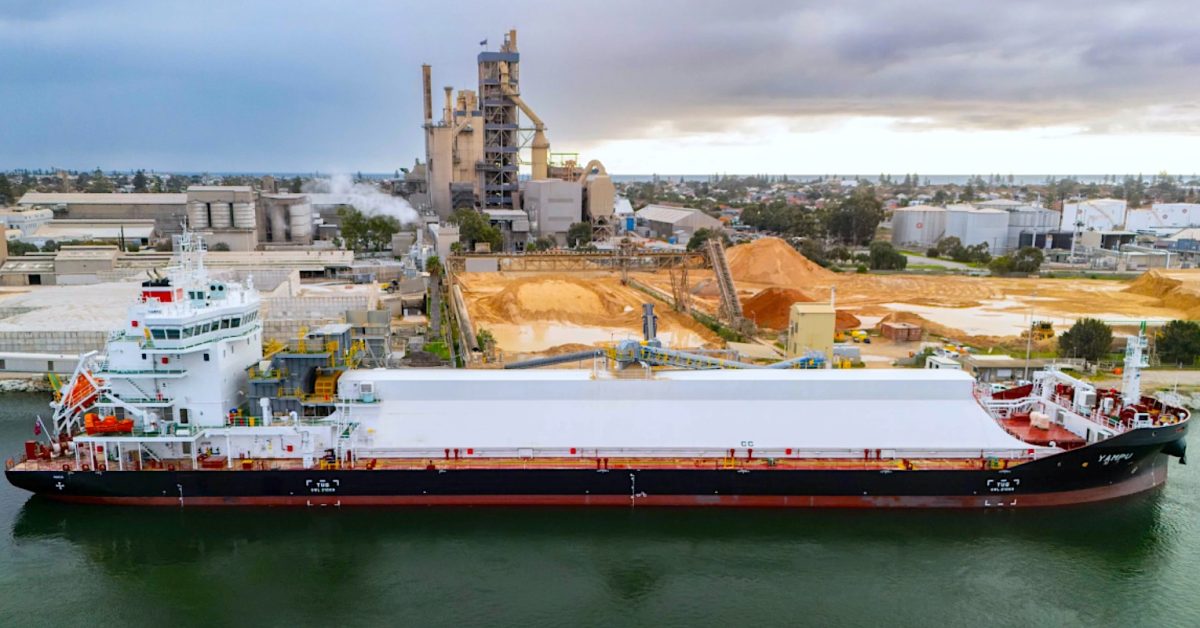
New Self-Loading Technology for Bulk Cargo Vessels Halves Freight Emissions
Updated September 19, 2026
3 min read
1 linked source
The MV Yampu, the world's first self-loading and unloading bulk cargo vessel, has been introduced, significantly reducing freight emissions by half. This innovation primarily impacts the shipping industry, particularly in the transport of bulk goods like coal and sugar. While the technology shows promise for decarbonization, its broader implications for the EV sector remain to be fully explored.
Share this story
Why it matters
- ✓The reduction in emissions from bulk cargo vessels could influence the overall carbon footprint of goods transported, potentially affecting the sustainability of EV supply chains.
- ✓As the shipping industry moves towards greener technologies, EV manufacturers may benefit from lower transportation costs and improved public perception.
- ✓This advancement could lead to increased investment in sustainable logistics, which may indirectly affect EV pricing and availability.
Reporting notes
EV Signal briefs are written to explain the verified change first, then add the context EV buyers and owners need to understand cost, availability, charging access, eligibility, or ownership impact.
If details are still developing, we try to say what is confirmed, what comes from secondary reporting, and what readers should verify before acting.
Source mix
1 linked source
1 media
Reviewed from: Electrek.
New Self-Loading Technology for Bulk Cargo Vessels Halves Freight Emissions
The introduction of the MV Yampu marks a significant advancement in the shipping industry, as it is the world's first self-loading and unloading bulk cargo vessel. This innovative technology has been reported to cut freight emissions in half, a crucial step towards decarbonizing the transportation of bulk goods such as coal, sugar, and other commodities.
What Changed
The MV Yampu utilizes a self-loading and unloading mechanism that streamlines the process of handling bulk cargo. This technology not only enhances operational efficiency but also significantly reduces the carbon emissions typically associated with loading and unloading processes. According to Electrek, the vessel's design addresses one of the major challenges in decarbonizing bulk shipping, which has historically been reliant on more polluting methods.
Why It Matters for Buyers and Owners
-
Impact on Supply Chains: The reduction in emissions from bulk cargo vessels could influence the overall carbon footprint of goods transported, which is particularly relevant for industries reliant on sustainable practices, including electric vehicle (EV) manufacturing.
-
Cost Implications: As the shipping industry adopts greener technologies, there may be potential cost savings in transportation that could benefit EV manufacturers and, by extension, consumers. Lower shipping costs could lead to more competitive pricing for EVs.
-
Sustainability Perception: The shift towards self-loading technology in bulk shipping may enhance the public perception of sustainability in logistics, which could positively affect consumer attitudes toward EVs and their associated supply chains.
Key Details from Source Material
The MV Yampu's self-loading and unloading capabilities represent a breakthrough in bulk cargo transport. Traditional methods often involve significant manual labor and machinery that contribute to higher emissions during loading and unloading. By automating these processes, the MV Yampu not only improves efficiency but also aligns with global efforts to reduce carbon emissions in the shipping sector.
The shipping industry faces unique challenges in decarbonization, particularly due to the sheer volume of goods transported and the reliance on fossil fuels. Innovations like the MV Yampu are essential in addressing these challenges and moving towards a more sustainable future.
What to Watch Next
As the MV Yampu begins operations, it will be important to monitor its performance and the actual emissions reductions achieved in real-world conditions. Additionally, the broader implications for the shipping industry and how these advancements might influence EV supply chains and pricing will be crucial areas to watch. Stakeholders in both the shipping and EV sectors will be keen to see how this technology evolves and its potential adoption across the industry.
In conclusion, while the MV Yampu represents a significant step forward in reducing emissions in bulk shipping, its impact on the EV market and overall sustainability efforts will require further observation and analysis.
Sources
These are the documents and reports used to build this brief so readers can verify the story directly.
Comments
Log in with
Loading comments…
More in Ownership
Tesla's Lawyers Misled Witness in Racism Trial
Tesla's ongoing racism trial in California has faced significant setbacks as it was revealed that a…
17h ago

Rivian R2 Faces First Recall Due to Camera Issue
Rivian has issued a recall affecting nearly 99,000 vehicles, including some of its new R2 models,…
17h ago

BMW iX3 Outperforms Mercedes GLC and Volvo EX60 in Highway Efficiency Test
In a recent highway test, the BMW iX3 demonstrated superior energy efficiency and range compared to…
23h ago

PHEV Batteries Show Resilience Despite Frequent Cycling
Plug-in hybrid electric vehicles (PHEVs) experience more frequent battery cycling than fully…
1d ago