Mercedes MB.Drive Assist Pro Requires Driver Engagement
Mercedes' new MB.Drive Assist Pro system, launching in early 2024, mandates drivers keep a hand on the wheel on surface streets, unlike Tesla's FSD. This decision reflects Mercedes' adherence to SAE autonomy levels, which may impact user adoption, especially among those accustomed to Tesla's hands-free driving.

Key takeaways
30-second read- 1Drivers may feel safer with hands-on controls, but it limits the appeal for those used to fully hands-free systems like Tesla's FSD.
- 2The requirement could deter potential buyers who prioritize convenience and autonomy in their driving experience.
- 3Mercedes' approach may resonate more with European drivers, who prefer stricter regulations, but could be less appealing in the U.S. market.
Confirmed
No official source linked yet
Reported
Secondary reporting: InsideEVs
Verify yourself
Eligibility, local prices and dates for your car, state or utility
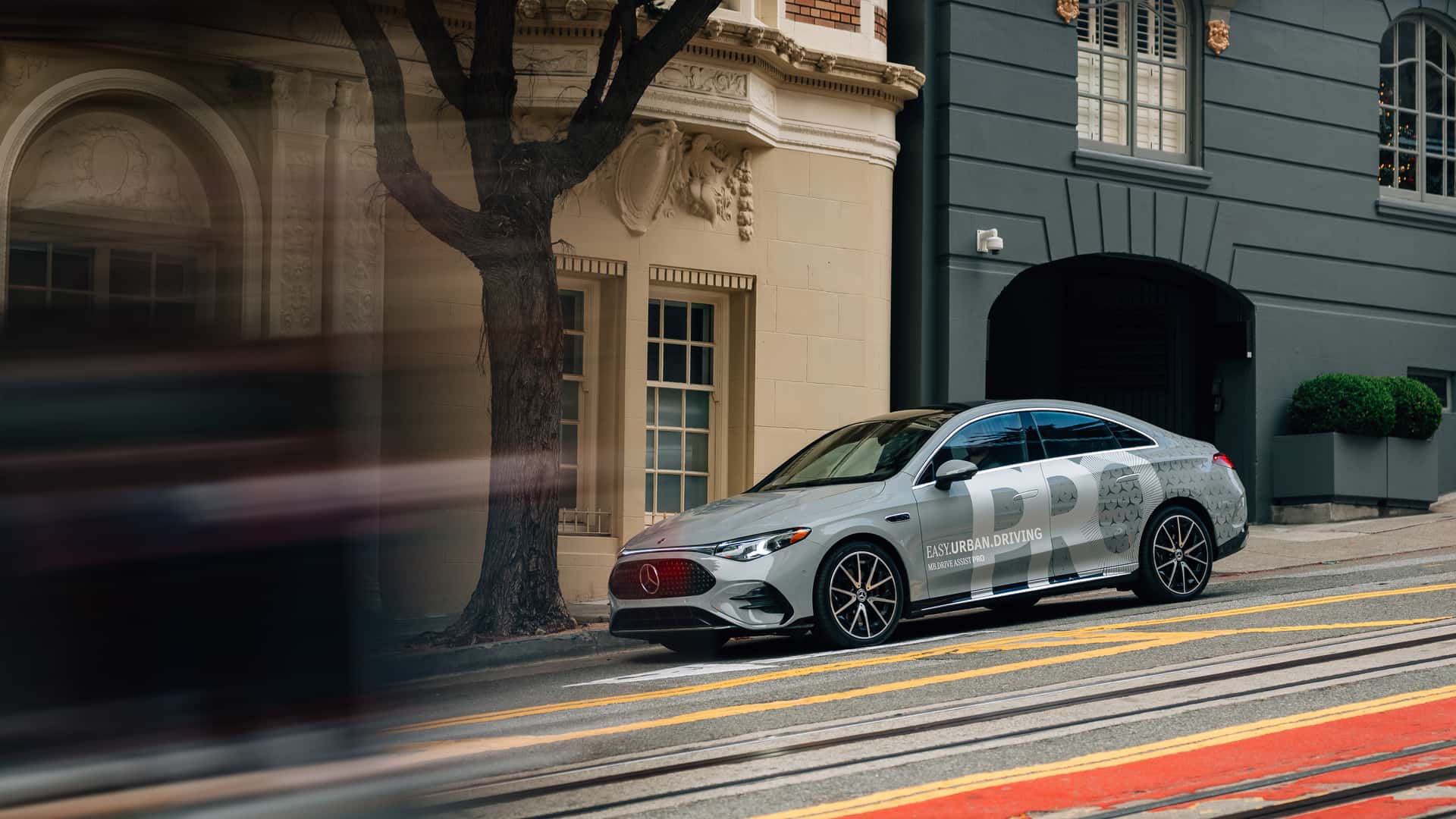
Mercedes is set to launch its MB.Drive Assist Pro automated driving system in early 2024, which will be available for a range of its electric and internal combustion vehicles. This system allows for hands-free driving on controlled-access highways but requires drivers to keep at least one hand on the wheel when navigating surface streets. This contrasts sharply with Tesla's Full Self-Driving (FSD) feature, which allows for hands-free operation in a wider variety of driving conditions.
What changed
The introduction of the MB.Drive Assist Pro system marks a significant step for Mercedes in the realm of automated driving. Unlike Tesla's FSD, which is often perceived as a more autonomous system, Mercedes is adhering to a strict interpretation of the Society of Automotive Engineers' (SAE) levels of driving automation. Mercedes Chief Technology Officer Jörg Burzer emphasized that the requirement for driver engagement on surface streets is a philosophical choice, reflecting their commitment to safety and regulatory standards.
Why it matters for buyers and owners
- Driver Engagement: The requirement to keep a hand on the wheel may provide a sense of safety for some drivers, but it could also deter those who prefer the convenience of fully autonomous driving.
- Market Appeal: This feature may resonate more with European drivers who favor stricter regulations, potentially impacting its acceptance in the U.S. market where consumers are used to more freedom in driving automation.
- Comparative Technology: Mercedes claims that its system's reliance on multiple sensor types—including radar and ultrasonic sensors—enhances safety and performance compared to Tesla's camera-only approach. However, this may not be enough to sway consumers who prioritize hands-free capabilities.
Key details
The MB.Drive Assist Pro system will be available as an over-the-air update for already-purchased eligible vehicles. It is designed to operate under the Level 2 automation category, which requires driver supervision. Mercedes aims to differentiate itself from Tesla by emphasizing the safety benefits of its multi-sensor approach, which includes five radar sensors and 12 ultrasonic sensors.
What to watch next
As the launch date approaches, it will be crucial to observe consumer reactions, particularly in the U.S. market. Will the hands-on requirement limit the appeal of Mercedes' system compared to Tesla's more permissive FSD? Additionally, the ongoing advancements in autonomous driving technology from both companies will likely shape consumer expectations and preferences in the coming years.
Sources
1 media- [1]Mercedes' Answer To Tesla FSD Requires Hands On The Wheel. Does That Make It Better Or Worse?Media
InsideEVs · insideevs.com · published Nov 9
Newsletter
Weekly EV signal. No spam.
Comments
Log in with
Loading comments…