Hybrid Vehicle Sales Increase as Battery Electric Sales Decline Post Tax Credit Expiration
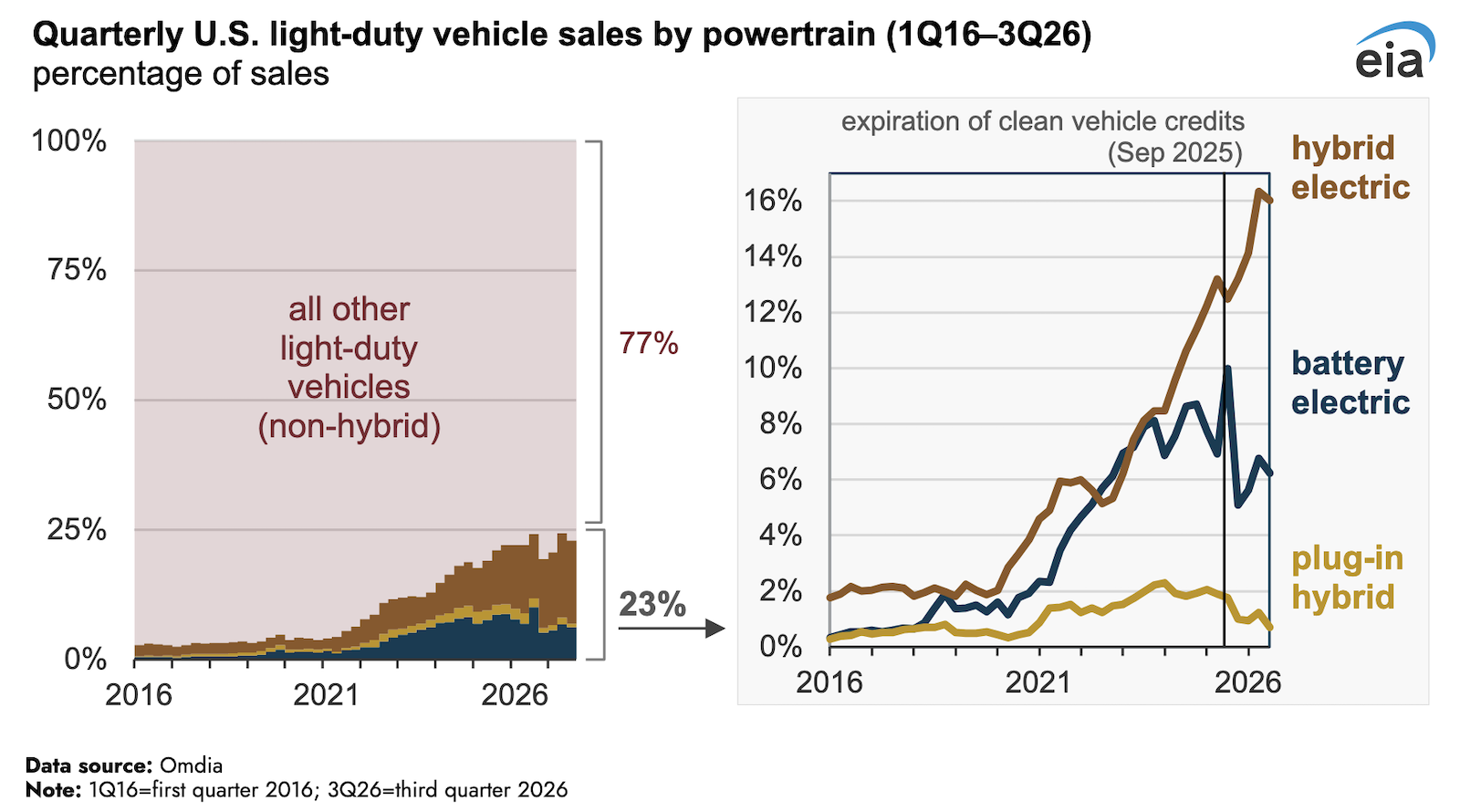
In the third quarter of 2026, hybrid electric vehicles gained market share, comprising 16% of new light-duty vehicle sales in the U.S., while the overall share of electric vehicles (including battery electric and plug-in hybrids) decreased to 23%. This decline follows the expiration of federal tax credits for battery electric vehicles, impacting their sales. The shift suggests a growing preference for hybrids amidst changing incentives.

Key takeaways
30-second read- 1The rise in hybrid sales may offer more affordable options for consumers, especially as battery electric vehicle prices remain high without tax incentives.
- 2With battery electric vehicle sales declining, buyers may face limited availability of fully electric options, impacting their choices.
- 3The expiration of tax credits could lead to higher ownership costs for battery electric vehicles, further influencing consumer decisions.
Confirmed
No official source linked yet
Reported
Secondary reporting: CleanTechnica
Verify yourself
Eligibility, local prices and dates for your car, state or utility
Hybrid Vehicle Sales Increase as Battery Electric Sales Decline
In the third quarter of 2026 (3Q26), hybrid electric vehicles (HEVs) saw a notable increase in market share, while battery electric vehicle (BEV) sales experienced a decline following the expiration of federal tax credits. According to CleanTechnica, HEVs accounted for 16% of new light-duty vehicle sales, contributing to a total of 23% for all electric and hybrid vehicles combined, down from 24% in the same quarter of the previous year.
What Changed
The market dynamics for electric vehicles in the U.S. have shifted significantly in 3Q26. The expiration of tax credits for battery electric vehicles has led to a decrease in their sales, while hybrid vehicles have gained traction. This change indicates a potential pivot in consumer preferences as buyers navigate the evolving landscape of vehicle incentives and pricing.
Why It Matters for Buyers/Owners
- Affordability: The increase in hybrid sales suggests that consumers may be seeking more cost-effective alternatives to fully electric vehicles, particularly as the latter's prices remain high without tax incentives.
- Availability: As battery electric vehicle sales decline, consumers may find fewer options available in the market, which could limit their choices when considering an electric vehicle.
- Ownership Costs: The expiration of tax credits for battery electric vehicles may lead to increased ownership costs, making hybrids a more attractive option for budget-conscious buyers.
Key Details from Source Material
The data from CleanTechnica reveals that the overall percentage of new light-duty vehicles sold as hybrids, battery electrics, or plug-in hybrids decreased slightly from 24% in 3Q25 to 23% in 3Q26. However, the hybrid segment specifically has shown resilience, with a 16% market share, indicating a growing acceptance among consumers. This trend may reflect a strategic shift as buyers reassess their options in light of changing incentives.
What to Watch Next
As the market continues to evolve, it will be important to monitor how the expiration of tax credits impacts battery electric vehicle sales in the coming quarters. Additionally, observing consumer responses to hybrid vehicles and any potential policy changes that could reinstate or modify incentives for electric vehicles will provide further insights into the future of the EV market. The ongoing developments in vehicle technology and pricing strategies will also play a critical role in shaping consumer preferences and market dynamics.
Sources
1 media- [1]Hybrid Sales Rise While Battery Electric Sales Remain Lower After Tax Credit ExpirationMedia
CleanTechnica · cleantechnica.com · published Oct 19
Newsletter
Weekly EV signal. No spam.
Comments
Log in with
Loading comments…