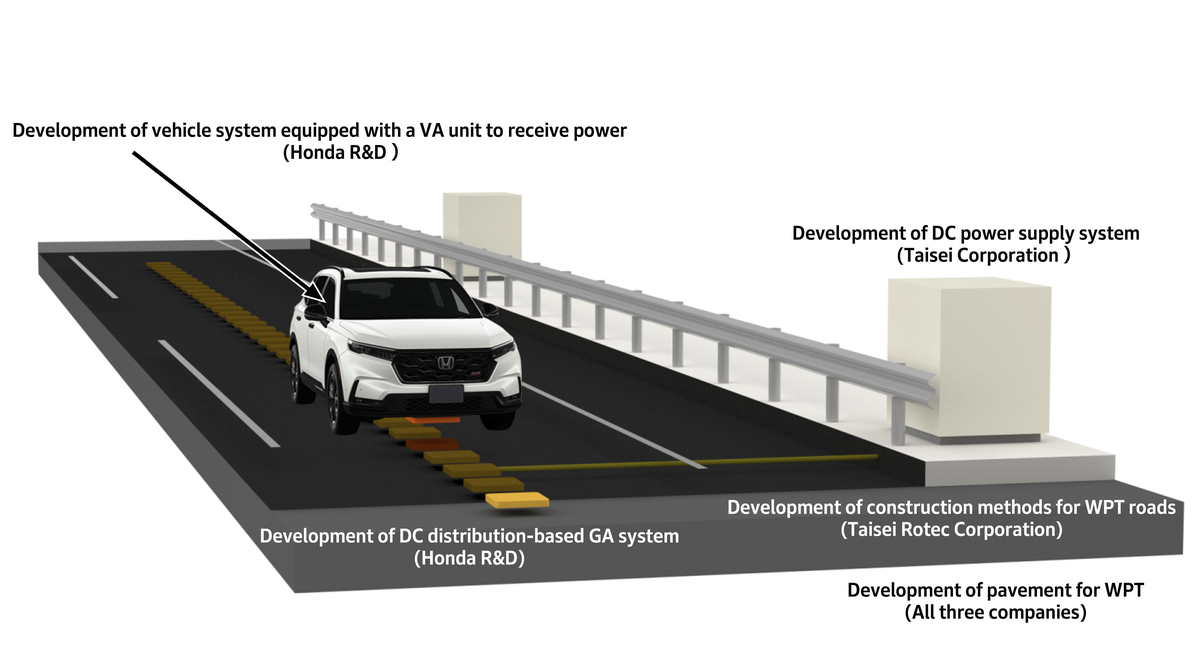
Honda Advances Wireless EV Charging Technology

Edited by Ionna Brakeley
Charging & Ownership
Updated October 14, 2026
3 min read
1 linked source
Honda has entered the wireless EV charging market, allowing electric vehicle drivers to recharge their batteries while on the move. This innovation aims to enhance the convenience of EV ownership, although specific details about implementation and availability remain unclear.
Share this story
Why it matters
- ✓Increased convenience for EV owners, potentially reducing downtime during long trips.
- ✓May lead to broader adoption of EVs as charging becomes more accessible.
- ✓Details on pricing and compatibility with existing EV models are still pending.
Honda Advances Wireless EV Charging Technology
Honda has officially joined the race to develop wireless electric vehicle (EV) charging systems, marking a significant step towards enhancing the convenience of EV ownership. This technology allows drivers to recharge their vehicles while on the road, eliminating the need for traditional plug-in charging methods. As the automotive industry shifts towards electrification, Honda's involvement underscores the growing trend of moving away from gas-powered vehicles.
What Changed
Honda's entry into the wireless EV charging market introduces a new layer of convenience for electric vehicle drivers. This system is designed to allow EVs to charge without the need for physical connections, which could streamline the charging process and reduce the time spent at charging stations. While the concept of wireless charging is not new, Honda's commitment to developing this technology signals a serious push towards making it a viable option for everyday use.
Why It Matters for Buyers/Owners
-
Increased Convenience: Wireless charging could significantly enhance the user experience for EV owners, allowing them to charge their vehicles seamlessly while driving or parked, thus reducing the hassle of finding charging stations.
-
Potential for Broader Adoption: As charging becomes more accessible and less time-consuming, it may encourage more consumers to consider switching from gas-powered vehicles to electric ones, further accelerating the shift towards electrification.
-
Pending Details: While the announcement is promising, specific information regarding pricing, compatibility with existing EV models, and the timeline for rollout is still unclear. Buyers should stay informed as these details develop.
Key Details from Source Material
According to CleanTechnica, Honda's move into wireless EV charging is part of a larger trend in the automotive industry to embrace electrification and reduce reliance on gas-powered vehicles. The convenience of being able to charge while on the go could be a game-changer for many drivers, especially those who frequently travel long distances. However, the article does not provide specific timelines or technical specifications for Honda's wireless charging systems, leaving some uncertainty about how soon consumers can expect to see this technology in action.
What to Watch Next
As Honda progresses in developing its wireless charging technology, potential buyers and current EV owners should keep an eye on announcements regarding:
- Implementation Timelines: When will Honda's wireless charging systems be available for consumers?
- Compatibility: Will existing Honda EV models be able to utilize this technology, or will it be limited to new releases?
- Pricing: What will the cost of wireless charging systems be, and how will it compare to traditional charging options?
In conclusion, Honda's commitment to wireless EV charging represents a significant step forward in the evolution of electric vehicle technology. While the details are still emerging, this development could greatly enhance the convenience and appeal of electric vehicles for a broader audience.
Sources
These are the documents and reports used to build this brief so readers can verify the story directly.
Reporting notes
EV Signal briefs are written to explain the verified change first, then add the context EV buyers and owners need to understand cost, availability, charging access, eligibility, or ownership impact.
If details are still developing, we try to say what is confirmed, what comes from secondary reporting, and what readers should verify before acting.
Source mix
1 linked source
1 media
Reviewed from: CleanTechnica.
Comments
Log in with
Loading comments…
More in Charging

char.gy Leads Delivery of On-Street Chargers Under the UK’s LEVI Program
char.gy has been selected to spearhead the rollout of on-street electric vehicle (EV) chargers in…
1h ago

Pilot and Tesla Launch First Megacharger Site for Heavy-Duty Electric Trucks
Pilot Flying J and Tesla have opened the first Megacharger site specifically designed for…
1h ago
Tesla Supercharging Prices Increase by 15% Over the Past Year
Tesla has raised its Supercharging prices by 15% in the last year, impacting EV owners who rely on…
1h ago

Tesla Offers Free Supercharging for Hurricane Isaias Relief
Tesla is providing free Supercharging from October 13 to 18 at select locations in Florida to…
19h ago