Europe's Inland Shipping Models Favor Battery Swapping Over HVO
A recent analysis shows that battery swapping for inland shipping is significantly cheaper than hydrotreated vegetable oil (HVO) propulsion. The daily operational cost for HVO is €2,515, while battery swapping costs €1,964, making battery swapping €551 cheaper. This discrepancy highlights the challenges of transitioning to alternative fuels in the shipping industry.

Key takeaways
30-second read- 1Freight operators may prefer battery swapping to reduce daily operational costs, impacting fuel choices.
- 2The underpricing of HVO could deter investment in renewable fuels, affecting long-term sustainability efforts.
- 3The shift towards battery swapping may lead to increased infrastructure development for charging stations in inland shipping.
Confirmed
No official source linked yet
Reported
Secondary reporting: CleanTechnica
Verify yourself
Eligibility, local prices and dates for your car, state or utility
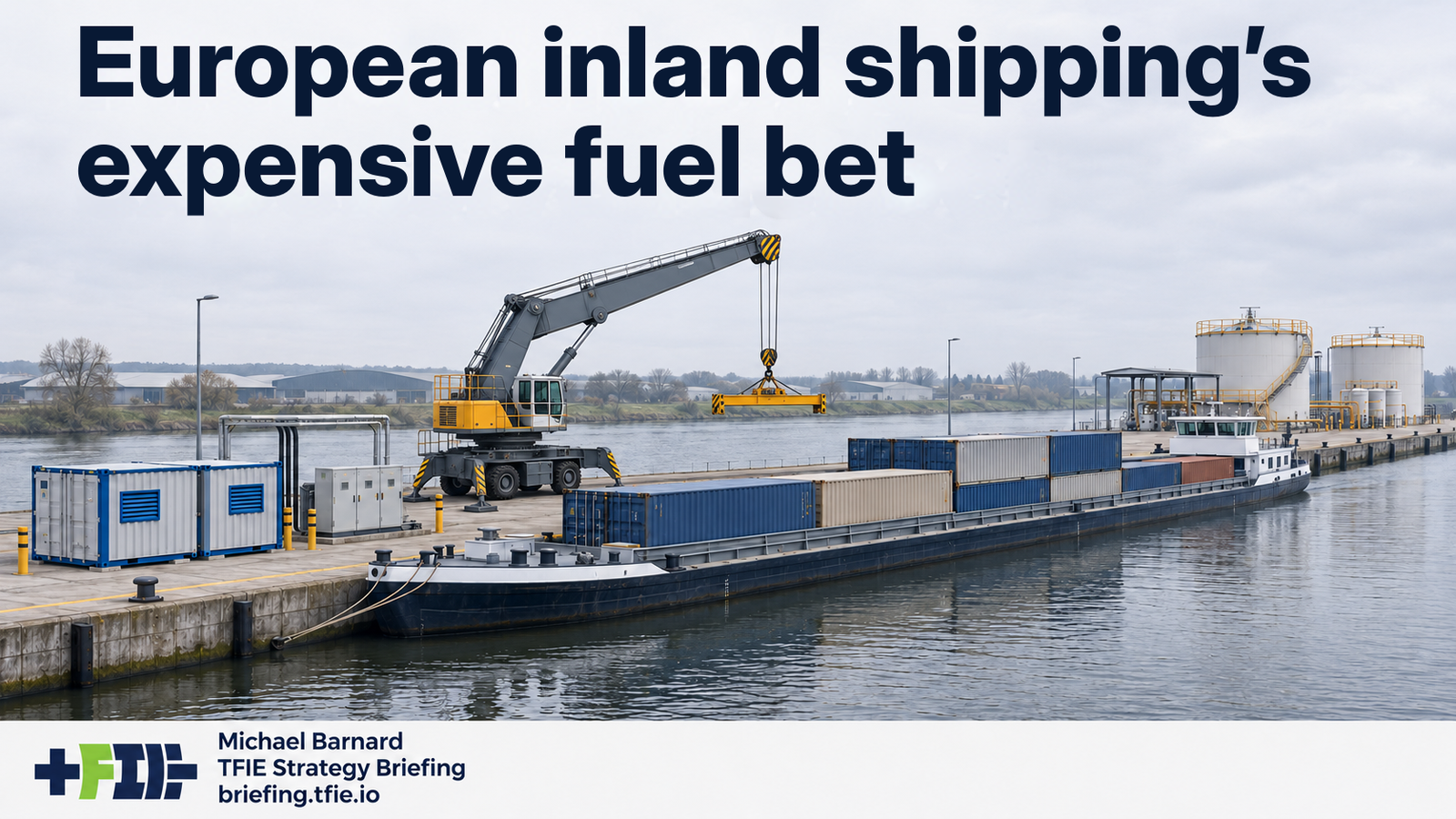
A recent analysis indicates that battery swapping is a more cost-effective option for inland shipping compared to hydrotreated vegetable oil (HVO) propulsion. For a new 110-meter dry-cargo vessel, the operational cost for HVO is calculated at €2,515 per day, while battery swapping costs €1,964 per day, resulting in a savings of €551 daily for operators choosing battery swapping over HVO. This finding challenges the assumptions made in various European studies that favor HVO pricing over battery technology.
What changed
The analysis reveals that the modeled costs for HVO propulsion do not reflect current market prices, which are significantly higher than previously estimated. The Central Commission for the Navigation of the Rhine (CCNR) and other studies have suggested that HVO would remain competitive with battery technologies; however, the reality shows that battery swapping is cheaper. This discrepancy raises questions about the viability of HVO as a sustainable fuel option in the shipping industry.
Why it matters for buyers and owners
- Cost Savings: Freight operators can save €551 daily by opting for battery swapping, which could lead to lower shipping costs for consumers.
- Investment Decisions: The underpricing of HVO may deter investments in renewable fuels, potentially slowing the transition to greener shipping practices.
- Infrastructure Development: A shift towards battery swapping could necessitate increased investment in charging infrastructure, enhancing accessibility for operators.
Key details
The analysis was based on the October 2026 Dutch HVO market price, which was found to be €2.59 per kilogram. The operational costs for HVO were calculated over a projected ownership period from 2028 to 2047. Additionally, the CCNR's cost indices indicate that fuel accounts for a significant portion of shipping costs, making the choice of fuel critical for operators.
What to watch next
As the shipping industry evaluates its fuel options, it will be important to monitor how these cost dynamics influence operational decisions. The CCNR is expected to revisit its transition strategies, potentially leading to a reevaluation of fuel pricing and infrastructure needs. The ongoing competition between HVO and battery technologies will shape the future of inland shipping and its environmental impact.
Sources
1 media- [1]Europe’s Inland Shipping Models Underprice Green Fuels. Market Prices Favor Battery Swapping.Media
CleanTechnica · cleantechnica.com · published Nov 25
Newsletter
Weekly EV signal. No spam.
Comments
Log in with
Loading comments…