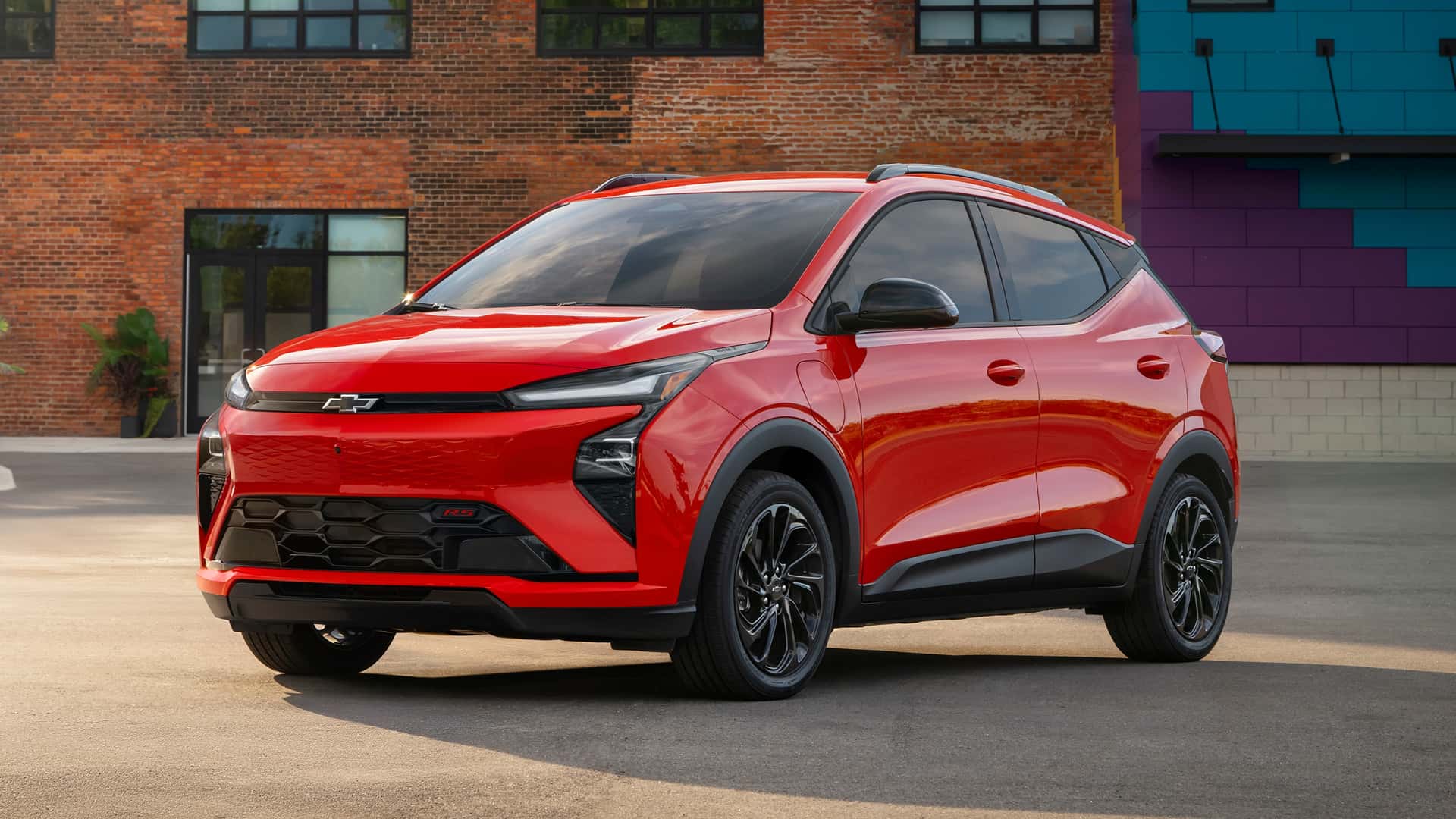
Chevy Bolt Range Test Reveals Benefits of Driving at Lower Speeds
Updated September 11, 2026
3 min read
1 linked source
A recent range test of the Chevy Bolt demonstrated that driving at 80 MPH significantly reduces the vehicle's range compared to driving at lower speeds. This finding is particularly relevant for EV owners and potential buyers who prioritize maximizing their vehicle's efficiency. The test highlights the importance of speed management for optimizing electric vehicle performance.
Share this story
Why it matters
- ✓Understanding the impact of speed on range can help EV owners plan longer trips more effectively.
- ✓Potential buyers can make informed decisions about their driving habits to enhance the efficiency of their electric vehicles.
- ✓This information may influence charging strategies and the overall cost of ownership for EV users.
Reporting notes
EV Signal briefs are written to explain the verified change first, then add the context EV buyers and owners need to understand cost, availability, charging access, eligibility, or ownership impact.
If details are still developing, we try to say what is confirmed, what comes from secondary reporting, and what readers should verify before acting.
Source mix
1 linked source
1 media
Reviewed from: InsideEVs.
Chevy Bolt Range Test Overview
A recent range test conducted on the Chevy Bolt has revealed that driving at higher speeds, specifically 80 MPH, can significantly diminish the vehicle's range. This finding underscores a critical aspect of electric vehicle (EV) ownership: the speed at which you drive can have a substantial impact on how far you can travel on a single charge.
What Changed
The test highlighted a clear correlation between speed and range. When driving at 80 MPH, the Chevy Bolt's efficiency drops, leading to a reduced driving range. This is a crucial insight for current and prospective EV owners, as it emphasizes the importance of speed management in maximizing vehicle performance.
Why It Matters for Buyers and Owners
-
Trip Planning: Understanding how speed affects range can help EV owners better plan their trips, especially for long-distance travel. Slower speeds may allow for longer journeys without the need for frequent charging stops.
-
Informed Decisions: Potential buyers can now factor in driving habits when considering the Chevy Bolt or similar EVs. Those who frequently drive at higher speeds may want to explore alternative models or adjust their driving style to enhance efficiency.
-
Cost of Ownership: By optimizing driving speed, EV owners can potentially reduce their charging frequency, leading to lower overall ownership costs. This can be particularly beneficial for those who rely on their vehicles for daily commutes or long trips.
Key Details from Source Material
According to the report from InsideEVs, the test results were surprising to many, revealing just how much driving speed can impact range. The article emphasizes that driving slower can lead to better efficiency, which is a crucial consideration for EV users. This finding aligns with general principles of electric vehicle operation, where energy consumption increases with speed.
What to Watch Next
As this topic develops, it will be important to monitor further tests and studies that explore the relationship between speed and range in various EV models. Additionally, insights from manufacturers regarding optimal driving practices for maximizing range could provide valuable guidance for EV owners. Keeping an eye on evolving technologies and features that enhance range efficiency will also be beneficial for consumers in the market for electric vehicles.
Sources
These are the documents and reports used to build this brief so readers can verify the story directly.
- This 80 MPH Chevy Bolt Range Test Shows The Value Of Not Speeding — InsideEVsMEDIA
Comments
Log in with
Loading comments…
More in Ownership
Tesla's Lawyers Misled Witness in Racism Trial
Tesla's ongoing racism trial in California has faced significant setbacks as it was revealed that a…
18h ago

Rivian R2 Faces First Recall Due to Camera Issue
Rivian has issued a recall affecting nearly 99,000 vehicles, including some of its new R2 models,…
18h ago
BMW iX3 Outperforms Mercedes GLC and Volvo EX60 in Highway Efficiency Test
In a recent highway test, the BMW iX3 demonstrated superior energy efficiency and range compared to…
1d ago
PHEV Batteries Show Resilience Despite Frequent Cycling
Plug-in hybrid electric vehicles (PHEVs) experience more frequent battery cycling than fully…
1d ago