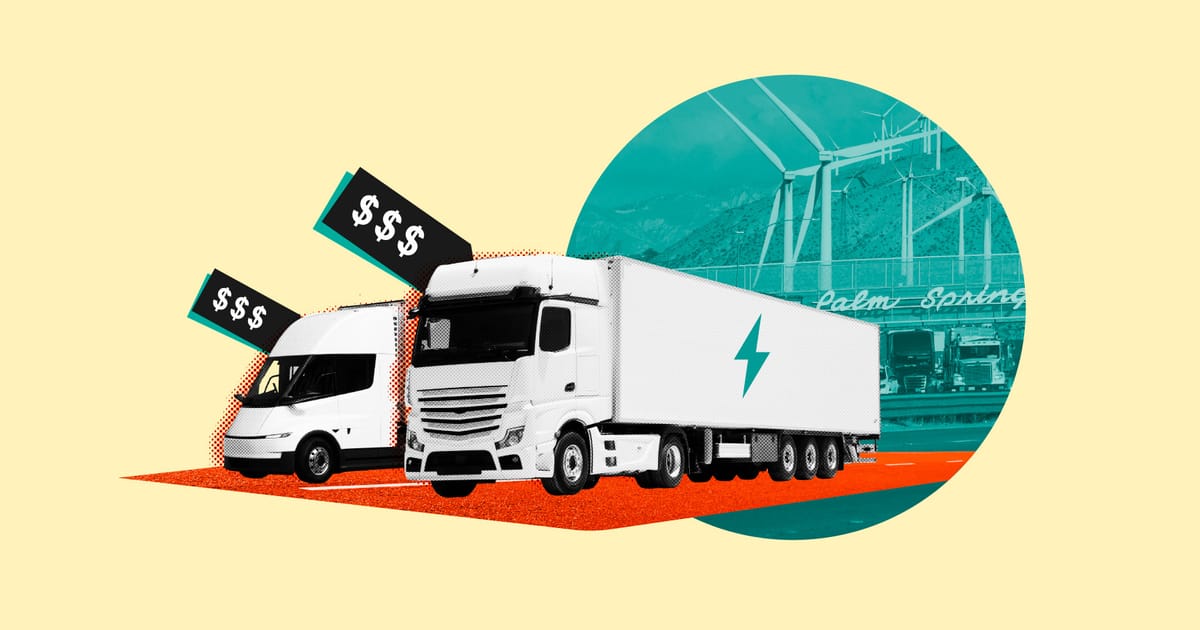
California Introduces Law to Address High Costs of Electric Trucks

Edited by Dash Coilwright
Incentives & Software
Updated October 1, 2026
3 min read
1 linked source
California has enacted a new law aimed at reducing the financial burden of electric trucks, which are currently more expensive than their diesel counterparts. This legislation will primarily benefit commercial fleet operators in the state, helping them transition to cleaner vehicles. However, specific details regarding eligibility and implementation timelines are still being finalized.
Share this story
Why it matters
- ✓The law may lower the upfront costs for electric truck purchases, making them more accessible to fleet operators.
- ✓It could accelerate the transition to electric vehicles in commercial sectors, contributing to emissions reduction goals.
- ✓Details on charging infrastructure improvements and ongoing ownership costs remain to be clarified.
California Introduces Law to Address High Costs of Electric Trucks
California has taken a significant step to alleviate the financial challenges associated with electric trucks by enacting a new law. This legislation is designed to help commercial fleet operators transition from traditional diesel trucks to electric vehicles (EVs), which are currently more expensive to purchase.
What Changed
The new law aims to provide financial incentives for the purchase of electric trucks, addressing the high upfront costs that have been a barrier for many businesses. With approximately 1.8 million commercial trucks operating in California, this initiative is expected to impact a substantial number of fleet operators looking to reduce their carbon footprint.
Why It Matters for Buyers/Owners
- Cost Reduction: The law is expected to lower the initial purchase price of electric trucks, making them a more viable option for fleet operators who are currently deterred by high costs.
- Environmental Impact: By facilitating the transition to electric trucks, the legislation supports California's broader goals of reducing greenhouse gas emissions and improving air quality.
- Infrastructure and Ownership Costs: While the law addresses purchase costs, details regarding improvements to charging infrastructure and the overall ownership costs of electric trucks are still pending. Fleet operators will need this information to make informed decisions about their investments.
Key Details from Source Material
According to Canary Media, the law is part of California's ongoing efforts to transition to cleaner energy sources and reduce pollution from heavy-duty vehicles. The specifics of the incentives, including eligibility criteria and the timeline for implementation, are still being developed. This uncertainty may affect how quickly fleet operators can take advantage of the new law.
What to Watch Next
As California moves forward with this legislation, stakeholders will be keenly watching for updates on the following:
- Eligibility Criteria: Clarification on which types of commercial fleets will qualify for the incentives.
- Implementation Timeline: Information on when these incentives will become available to fleet operators.
- Infrastructure Development: Plans for expanding charging infrastructure to support the increased adoption of electric trucks.
In conclusion, California's new law represents a proactive approach to addressing the high costs of electric trucks, potentially transforming the commercial transportation landscape in the state. As details emerge, fleet operators will need to stay informed to maximize the benefits of this legislation.
Sources
These are the documents and reports used to build this brief so readers can verify the story directly.
- Electric trucks cost too much. California has a law for that. — Canary MediaMEDIA
Reporting notes
EV Signal briefs are written to explain the verified change first, then add the context EV buyers and owners need to understand cost, availability, charging access, eligibility, or ownership impact.
If details are still developing, we try to say what is confirmed, what comes from secondary reporting, and what readers should verify before acting.
Source mix
1 linked source
1 media
Reviewed from: Canary Media.
Comments
Log in with
Loading comments…
More in Incentives
Philippine Electric Vehicle Summit to Assess National EV Policy
The 14th Philippine Electric Vehicle Summit (PEVS) is set to take place this October, serving as an…
1d ago

Senate Report Reveals Fossil Fuel Industry's Financial Gains During Trump Administration
A Senate report has highlighted that the fossil fuel industry received approximately $201 billion…
5d ago

NYC Comptroller Proposes $5B Climate Investment Initiative
New York City Comptroller Mark Levine has announced a proposal to introduce $5 billion in…
5d ago

GM Offers Free EV Chargers and Incentives for New Owners
General Motors (GM) is providing customers with a free Level 2 home charger valued at $1,999, along…
6d ago