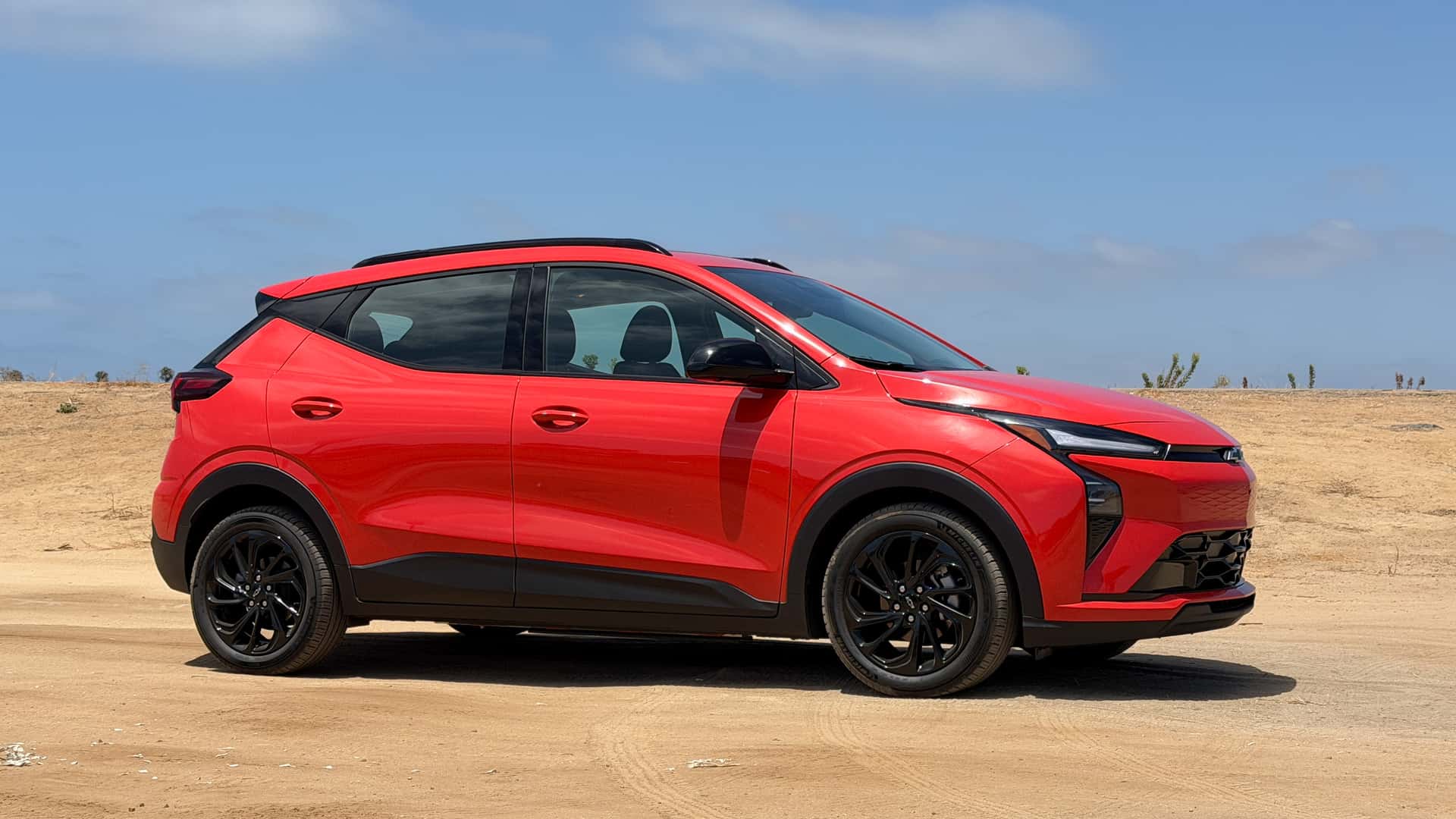
2027 Chevy Bolt Shows Improved Highway Efficiency at 60 MPH

Edited by Ionna Brakeley
Charging & Ownership
Updated October 9, 2026
3 min read
1 linked source
The 2027 Chevy Bolt has demonstrated significantly better efficiency at 60 mph compared to 70 mph during a highway range test. This finding is particularly relevant for potential buyers and current owners who prioritize long-distance travel. However, specific range figures at these speeds have not been disclosed.
Share this story
Why it matters
- ✓Improved efficiency at lower speeds may enhance the Bolt's appeal for highway commuters, potentially reducing range anxiety.
- ✓This could lead to lower ownership costs for drivers who frequently travel at 60 mph, as they may require less frequent charging.
- ✓Understanding the Bolt's performance at different speeds can help buyers make more informed decisions about their EV needs.
Improved Efficiency at 60 MPH
Recent tests have revealed that the 2027 Chevy Bolt operates with greater efficiency at 60 mph compared to 70 mph. This finding is crucial for both potential buyers and current owners, particularly those who frequently travel on highways.
What Changed
During a highway range test, the Chevy Bolt showcased a marked difference in performance based on speed. While specific range figures were not provided, the efficiency at 60 mph was notably better than at 70 mph. This suggests that drivers may achieve a longer range when maintaining a steady speed of 60 mph, which is often common on highways.
Why It Matters for Buyers and Owners
- Enhanced Appeal for Commuters: The improved efficiency at lower speeds could make the Bolt more attractive to highway commuters who are concerned about range anxiety. Knowing that the vehicle can travel farther at 60 mph may encourage more drivers to consider the Bolt for their daily commutes.
- Lower Ownership Costs: For those who regularly drive at 60 mph, this efficiency could translate into lower ownership costs. Less frequent charging means reduced time spent at charging stations and potentially lower electricity costs.
- Informed Decision-Making: Understanding how the Bolt performs at different speeds allows buyers to make better-informed decisions regarding their electric vehicle needs. This information can be particularly valuable for those who plan long-distance travel.
Key Details from Source Material
According to InsideEVs, the efficiency of the 2027 Chevy Bolt at 60 mph significantly outperformed its efficiency at 70 mph during the highway range test. However, the article did not provide specific numbers regarding the range achieved at these speeds, leaving some uncertainty about the exact benefits of driving at 60 mph versus 70 mph.
What to Watch Next
As more information becomes available regarding the 2027 Chevy Bolt's range and efficiency, potential buyers and current owners should stay updated. Future tests may provide clearer insights into the actual range figures at various speeds, which will be essential for understanding the vehicle's capabilities in real-world driving conditions. Additionally, any updates from Chevy regarding improvements or changes to the Bolt's specifications will be worth monitoring as they could impact buyer decisions and ownership experiences.
Sources
These are the documents and reports used to build this brief so readers can verify the story directly.
- The 2027 Chevy Bolt Can Drive Farther Than You Think At 60 MPH — InsideEVsMEDIA
Reporting notes
EV Signal briefs are written to explain the verified change first, then add the context EV buyers and owners need to understand cost, availability, charging access, eligibility, or ownership impact.
If details are still developing, we try to say what is confirmed, what comes from secondary reporting, and what readers should verify before acting.
Source mix
1 linked source
1 media
Reviewed from: InsideEVs.
Comments
Log in with
Loading comments…
More in Ownership

FedEx Orders 2,000 Harbinger Electric Trucks for Canada and U.S.
FedEx has placed an order for 2,000 electric trucks from Harbinger to be deployed in Canada and the…
1h ago

VW ID.4 Recalled Over Fire Risk, Owners Advised to Limit Charging
Volkswagen has issued a recall for certain ID.4 electric vehicles due to a potential fire risk…
1h ago

Nanoramic Introduces NXSP Binders for Li-ion Electrodes
Nanoramic has launched an eight-product catalog featuring NXSP binders specifically designed for…
7h ago

Advanced Materials Transforming EV Battery Thermal Management
The design of electric vehicle (EV) batteries is evolving significantly as automakers face pressure…
7h ago